Sepsis: Signs, Symptoms and What to Do (UK Guide for Parents and Carers)
Sepsis affects around 245,000 people in the UK each year and can become life-threatening within hours. This in-depth guide explains the signs in adults and children, when to call 999, and what action to take.
What it is, how to spot it, and what to do when every minute counts.
Last updated 19 July 2026 using current NHS, NICE and NHS England guidance.
Need the quick 'Red Flag' checklist for an emergency or childcare setting? View our Quick Guide to Sepsis Signs for Parents
Important notice: This article is for general information only and does not constitute medical advice. It should not be used as a substitute for professional medical guidance, diagnosis or treatment. If you are concerned about symptoms, contact a qualified healthcare professional, call NHS 111, or in an emergency call 999.
Sepsis is a life-threatening medical emergency that can be difficult to recognise. The UK Sepsis Trust estimates that around 245,000 people develop sepsis in the United Kingdom each year, and that it contributes to approximately 48,000 deaths.1 Its early symptoms can look like flu, a chest infection or another common illness, but a person can go from mildly unwell to critically ill within hours.
The first people to notice that something is badly wrong are often family members, colleagues, carers or workplace first aiders: the people who know how someone normally looks and behaves, and who are there in the hours before a mild illness turns serious. Knowing what to look for, and acting on it, is what saves lives. This guide explains what sepsis is, how to recognise it in adults and children, what to do if you suspect it, who is most at risk, and how it is treated.
What is Sepsis?
Sepsis is a life-threatening condition that occurs when the body's response to an infection begins to damage its own tissues and organs.2 It is not an infection in its own right. It is the body's overwhelming and dysregulated reaction to one. Almost any infection can trigger it, including common problems such as chest infections, urinary tract infections, infected wounds and even insect bites.
Normally, when bacteria, viruses or fungi enter the body, the immune system mounts a proportionate response. White blood cells are mobilised, inflammation is concentrated at the site of infection, and the invading organisms are contained and destroyed. In sepsis, that process turns against the body. The immune system releases chemicals into the bloodstream that trigger widespread inflammation throughout the body rather than at the site of infection alone.
This systemic inflammation can damage blood vessels, impair circulation and reduce the supply of oxygen to vital organs. In severe cases, sepsis can progress to septic shock, with dangerously low blood pressure and a particularly high risk of multiple organ failure and death.
It is important to understand that sepsis is not contagious. You cannot catch sepsis from another person. The infections that lead to it can be contagious, however, which is why good hygiene and the prompt treatment of infections remain sensible precautions.2
The modern clinical definition, known as Sepsis-3 and published in 2016, describes sepsis as life-threatening organ dysfunction caused by a dysregulated host response to infection.9 That definition matters because it shifts the emphasis away from simply having an infection and towards the presence of organ dysfunction. It is the body's own response, not the infection alone, that makes sepsis lethal. In November 2025, NICE replaced its long-standing single sepsis guideline with three separate guidelines covering people aged 16 and over, people under 16, and pregnant or recently pregnant people, reflecting how differently the condition can present across these groups.3
Sepsis, septicaemia and blood poisoning
Sepsis, septicaemia and blood poisoning are often used as if they mean the same thing, but they are not precise synonyms. Septicaemia is an older, looser term, usually taken to mean a serious bloodstream infection, while bacteraemia means that bacteria are present in the blood. Sepsis is different again: it describes life-threatening organ dysfunction caused by the body's response to an infection, and it can develop even when no organism is ever found in the blood. That is why waiting for signs of blood poisoning can mean waiting too long.
Signs and symptoms of sepsis
Sepsis is notoriously hard to spot. Its symptoms mimic common illnesses, and there is no single definitive sign. That is precisely why awareness matters so much. Recognising the pattern, and acting on the instinct that something is badly wrong, is often the difference between a good outcome and a catastrophic one. The warning signs differ between adults and children, and between older and younger children, so it is worth knowing each set.
Signs of sepsis in adults
The UK Sepsis Trust uses the word SEPSIS to help people remember six red-flag symptoms in adults.1 If an adult is unwell, whether or not you know they have an infection, call 999 or go to A&E if they have any one of these:
- S, Slurred speech or confusion
- E, Extreme shivering or muscle pain
- P, Passing no urine in a day
- S, Severe breathlessness
- I, It feels like you are going to die
- S, Skin mottled or discoloured
That fifth symptom, the sense of impending death, may sound vague, but it is clinically significant. People developing sepsis frequently describe an overwhelming feeling that something is catastrophically wrong. If someone tells you they feel like they are dying, take it seriously. That instinct can be the most important warning sign available.
On brown and black skin, changes such as mottling, paleness or a bluish tinge can be harder to see and may show most clearly on the palms of the hands, the soles of the feet, the inside of the forearms, or the lips and around the eyes.1,2 This is worth keeping in mind in any setting.
Signs of sepsis in babies and children under five
Recognising sepsis in babies and young children is harder than in adults, because they cannot describe how they feel and the symptoms overlap with ordinary childhood illnesses. Sepsis can progress quickly. The NHS advises calling 999 or going straight to A&E if a baby or child under five has any one of the following. You may not know whether they have an infection, and they do not need to have every sign: one serious warning sign, or a strong sense that something is badly wrong, is enough.2
- Breathing very fast or having difficulty breathing, which may show as grunting or the tummy sucking in under the ribcage.
- Blue, grey, pale or blotchy skin, lips or tongue. On black or brown skin, check the palms and soles.
- A rash that does not fade when you press it.
- A very high temperature (38°C or above in babies under three months, or 39°C or above at three to six months) or a very low temperature (below 36°C, or feeling cold to the touch or shivery).
- A weak, high-pitched or continuous cry that is not like their normal cry.
- Not responding as they normally would, not feeding, being difficult to wake or more sleepy than usual.
- Not having a wet nappy or passing urine for 12 hours.
- Any symptom that makes you worried it could be sepsis.
Signs of sepsis in children aged five and over
Older children are assessed against the same list the NHS uses for adults. Call 999 or go to A&E if a child aged five or over is breathing very fast; is confused, has slurred speech or is not making sense; has blue, pale or blotchy skin; has a very high or very low temperature, or feels hot or cold to the touch or shivery; has a rash that does not fade when you press it; or has any symptom that makes you worried it could be sepsis.2 The urine warning sign also differs by age: for babies and children under five it is not passing urine in the last 12 hours, and for children aged five and over it is not passing urine all day.
Working in childcare or caring for young children?
We have produced a shorter, condensed checklist of the red-flag signs of sepsis in children, written for parents and childcare settings. Read the quick guide to sepsis signs in children.
Why temperature can mislead
Many people associate sepsis with a very high temperature. Fever is common, but it is not universal. Some people with sepsis, particularly the very young, the elderly and those with weakened immune systems, may have a normal or even abnormally low temperature. A high temperature is also less common in older adults.2 A child who is abnormally cold, below 36°C, can be showing signs of sepsis just as much as one with a raging fever. Relying on temperature alone will miss cases.
A rash and the glass test
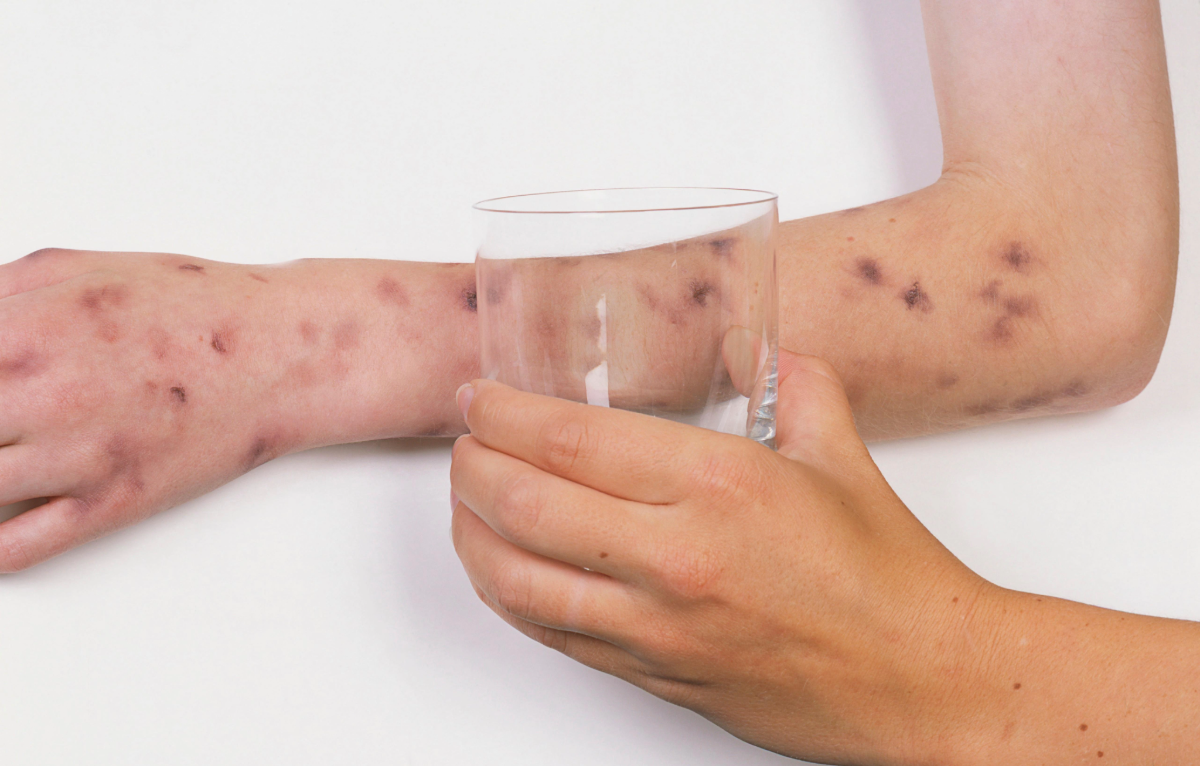
A rash that does not fade when you press a clear glass firmly against it can be a sign of meningococcal disease and is a medical emergency: if the marks stay visible through the glass, call 999. You can read more in our guide to meningitis and the glass test. This kind of non-blanching rash is uncommon in sepsis, though, and a person can be seriously ill with sepsis and have no rash at all.2 A rash that does fade does not rule sepsis out, so do not wait for a non-blanching rash before acting if the person has other serious symptoms.
What to do if you suspect sepsis
Act immediately. Do not wait to see whether things improve. A person can deteriorate from an apparently mild illness to life-threatening organ dysfunction within hours.
Call 999 or get to A&E without delay
If you see any of the red-flag signs above, call 999 or get the person to A&E straight away. Do not let them drive themselves: either have someone else drive them, or call 999 for an ambulance, and call an ambulance if they are severely unwell, confused, struggling to breathe or deteriorating quickly. Do not call 111 for red-flag symptoms, and do not wait for a GP appointment. Prompt recognition and treatment are critical to surviving sepsis.
Say the words: could this be sepsis?
The UK Sepsis Trust's public message is Just Ask: could it be sepsis?1 When paramedics arrive, or when you reach A&E, say plainly that you are concerned this could be sepsis. This makes your concern explicit and helps staff understand why you are worried. Then continue by describing the symptoms you have seen and how quickly the person's condition has changed.
Describe what you have seen
Give as much specific information as you can: what infection the person has or recently had, if you know of one, when the symptoms began, how quickly they have changed, exactly what you have noticed, and any relevant medical history, allergies or current medication. If you are caring for a child in a professional capacity, make sure you can access their emergency contact details and any medical information your setting holds.
Do not leave them alone
Stay with the person while you wait for help. Sepsis can cause rapid deterioration, including loss of consciousness. Keep watching their breathing, skin colour and how they respond to you. If they become unresponsive, open their airway and check their breathing: if they are breathing normally, place them in the recovery position, and if they are not breathing normally, call 999 and start CPR. Our guide to what to do in an emergency sets out these steps in more detail.
If you are unsure
If someone is unwell and something does not feel right, but you are not sure it is sepsis, call NHS 111 or contact your GP urgently, explain your concerns clearly and mention sepsis by name. Trust your instincts. NHS guidance is unequivocal on this: you know the person you are caring for better than anyone, and if you believe they are more unwell than you would expect, act on it.2 In a workplace, this responsibility often falls to trained first aiders, who are well placed to notice when a colleague is becoming unusually and rapidly unwell.
Equip your first aiders to recognise the emergency
Recognising serious illness and knowing when to call 999 are core first-aid skills, and sepsis is one of the emergencies in which that judgement can matter. Constellation Training delivers accredited First Aid at Work and Emergency First Aid at Work courses in-house for organisations, so your first aiders are ready to act when it matters. Explore our first aid training.
Who is at higher risk of sepsis
Anyone can develop sepsis from any infection, but some groups are at considerably higher risk. Babies under one, adults over 75, and people whose immune systems are weakened are the most vulnerable.2
Risk is particularly high in babies under one year, especially premature babies and newborns whose immune systems are still developing. Adults over 75 are a particularly high-risk group, and their share of sepsis cases has risen sharply over recent decades, from 32.4% to 52.5% of patients according to analysis of English hospital data.10 People with weakened immune systems, including those having chemotherapy, taking immunosuppressant medication or living with conditions such as HIV, are also at greater risk, as are people with long-term conditions such as diabetes, kidney disease, liver disease or lung disease. Anyone who has recently had surgery, or who has wounds, burns, catheters or drips, faces raised risk, and so do pregnant women and those who have recently given birth, particularly after a caesarean or a prolonged labour. Research from the University of Manchester has found that people from the most socioeconomically deprived backgrounds are almost twice as likely to die from sepsis.4
For parents of healthy children in particular, it is worth stressing that sepsis does not only affect those with underlying conditions. A previously well child can develop sepsis from an ear infection, a bout of chickenpox or a cut that becomes infected. What matters is not the severity of the original infection but how the person's immune system responds to it.
Common infections that lead to sepsis
Around 70% of sepsis cases begin in the community rather than in hospital.2,4 The infections that most commonly trigger it include pneumonia and other chest infections, urinary tract infections, abdominal infections such as appendicitis and peritonitis, skin and wound infections including cellulitis and infected bites, meningitis, and bone or joint infections. Any infection can lead to sepsis: bacterial infections are the most common cause, but viral infections can trigger it too, and a bacterial infection can develop during or after a viral illness.2
How is sepsis treated?
Sepsis is treated as a medical emergency in hospital, and how quickly and intensively depends on the person's age, their condition and how seriously ill they are assessed to be.2 For people aged 16 and over in acute settings, clinicians use the National Early Warning Score, known as NEWS2, alongside the person's history, examination and clinical judgement to grade the risk of severe illness or death.3 Those judged to be at high risk should receive broad-spectrum intravenous antibiotics within one hour of their first NEWS2 score. For patients at moderate risk, broad-spectrum antibiotics may be deferred for up to three hours while clinicians gather information and clarify the diagnosis, and for those at low risk NICE allows up to six hours, with very low risk care guided by clinical judgement. What may be deferred is the broad-spectrum antibiotic, not the assessment itself. People under 16, and pregnant or recently pregnant people, are assessed under separate NICE guidance.3
One widely used UK framework is the Sepsis Six, developed by the UK Sepsis Trust. It describes six investigations and treatments that may be needed rapidly once sepsis is suspected: taking blood cultures, measuring blood lactate and monitoring urine output, alongside giving intravenous antibiotics, intravenous fluids and oxygen where needed.1 Clinicians now work to the risk-based NICE guidance and local treatment pathways rather than applying a single fixed bundle to everyone. These are clinical interventions, not actions that members of the public should attempt. The most useful thing anyone else can do is recognise sepsis early and get the person to emergency care quickly.
In severe cases, patients may need intensive care for organ support, including mechanical ventilation, drugs to maintain blood pressure, and sometimes dialysis for kidney failure. Recovery time varies enormously depending on the severity of the episode and how quickly treatment began.
Post-sepsis syndrome
Survival is not always the end of the story. The UK Sepsis Trust estimates that around 40% of sepsis survivors experience lasting physical, psychological or cognitive effects, known as post-sepsis syndrome.1 These can include chronic fatigue, muscle weakness and joint pain, poor concentration and memory difficulties, anxiety, depression and post-traumatic stress, reduced organ function, and increased vulnerability to further infections. Researchers have noted overlaps between post-sepsis syndrome and long COVID, including fatigue, muscle pain, poor sleep and cognitive difficulty.4
Martha's Rule: when concerns are not being heard
In 2021, thirteen-year-old Martha Mills developed sepsis in hospital after being admitted with a pancreatic injury she sustained falling from her bicycle. Her parents repeatedly raised concerns about her deterioration, but those concerns were not acted on, and she was not moved to intensive care in time. In 2023, a coroner ruled that Martha would probably have survived had she been transferred to intensive care earlier.6
Following a sustained campaign by Martha's parents, Merope Mills and Paul Laity, NHS England introduced Martha's Rule. It gives patients, their families and carers, as well as staff, a route to request a rapid review from a different team if they believe a patient is deteriorating and their concerns are not being heard. That review is available around the clock.6
Rollout has been phased. It began in May 2024 at 143 pilot sites, expanded in April 2025 to all remaining hospitals providing adult and paediatric acute inpatient care, and has since been written into the NHS Standard Contract for 2026/27, which requires every NHS trust in England to have the three core components of Martha's Rule in place by 31 March 2027.6 Hospitals are at different stages of implementation, so it is worth checking whether it is available at a particular hospital by asking staff or looking at the trust's website.
Early management information shows that Martha's Rule is being used to identify deterioration and prompt changes in care. NHS England recorded 16,160 calls between September 2024 and May 2026, with 72% coming through the family and carer escalation route.6 Of these, 4,986 related to acute deterioration. Following review, 664 resulted in transfer to intensive, high-dependency, enhanced or specialist care, while 2,301 led to other changes in treatment, including investigations, medication, intravenous fluids, oxygen or surgical management, without transfer to a higher level of care.6
Martha's Rule matters to anyone who may one day sit at a hospital bedside. If you believe someone you love is getting worse and you feel you are not being listened to, then where Martha's Rule is available you can use the hospital's escalation route. As Martha's mother has argued, lives are saved when patients and families are given the power to act on their suspicions when they fear doctors may have got it wrong.6
Preventing sepsis
Sepsis cannot always be prevented, but the risk of some infections can be reduced. Sensible measures include keeping up to date with recommended vaccinations, practising good hand hygiene, cleaning and caring for cuts, grazes and wounds properly, and seeking medical advice when an infection is severe, worsening or not improving as expected. Take prescribed antibiotics exactly as directed. It is also worth being alert to the raised risk that follows surgery, childbirth and invasive medical procedures.2,3
For childcare and workplace settings, this means maintaining appropriate hygiene and infection-control standards, encouraging recommended vaccination, and having clear procedures for responding when someone becomes seriously unwell.
A Brief History of Sepsis
The word sepsis has ancient origins. It comes from the Greek and is linked to a term meaning to make rotten. It was first used in a medical context by Hippocrates around 400 BC, who described sepsis as a dangerous decay occurring within the body.7,8 The concept appears earlier still in Homer, making it one of the oldest medical ideas still in everyday use, with more than 2,700 years of recorded history.7
For centuries, understanding advanced very little. The Roman physician Galen believed the formation of pus was beneficial to healing, an idea that persisted for roughly 1,500 years.8 The true nature of sepsis only began to emerge in the 19th century, through a series of discoveries that were as tragic as they were important.
In 1847, the Hungarian obstetrician Ignaz Semmelweis noticed that women delivered by medical students arriving directly from performing autopsies died of childbed fever, a form of sepsis, at far higher rates than those delivered by midwives. When he introduced hand washing with chlorinated lime, mortality from the condition fell from over 10% to below 3%.8 Semmelweis was ridiculed rather than celebrated. He was dismissed from his post and died in 1865 in a psychiatric institution, from a wound infection that itself progressed to sepsis. His work was only vindicated later, once Louis Pasteur's germ theory and Joseph Lister's antiseptic techniques confirmed what he had observed.8
Lister, working in Glasgow in the 1860s, found that around half of all amputees in his surgical division died of sepsis. By using carbolic acid to sterilise instruments and clean wounds, he cut mortality dramatically, and unlike Semmelweis he persuaded his peers. Alexander Fleming discovered penicillin in 1928, and its development into a usable treatment during the 1940s gave doctors a direct weapon against many of the bacterial infections that cause sepsis.8 The thread running through all of it is the same principle behind everything in this guide: recognition and timely action save lives.
Sepsis in the UK: the scale of the problem
The figures describe a condition that is both common and consistently under-recognised. In England, there were 133,484 hospital admissions with a primary diagnosis of sepsis in 2024 to 2025, and close to 250,000 once cases recorded as a secondary diagnosis are included.11 Treating sepsis cost the NHS in England more than a billion pounds in that year alone,11 and recorded sepsis-coded hospital admissions rose roughly 7.5-fold between 1998 and 2023, although changes in diagnostic coding and better recognition account for much of that recorded increase.10
Death-certificate data show sepsis-related deaths climbing over the past two decades,5 and the most recent figures for England record around 4,000 deaths directly attributed to sepsis in 2025, with sepsis involved in more than 23,000.11 Sepsis is widely acknowledged to be under-recorded on death certificates, which is part of why the true toll, estimated by the UK Sepsis Trust at around 48,000 deaths a year across the UK, is far higher than certificates alone suggest.1
In July 2026, NHS England and the Department of Health and Social Care published a Sepsis Modern Service Framework, a ten-year plan to reduce deaths, life-threatening complications and the long-term impact of sepsis and severe infection by at least a quarter by 2035.11 Public education, awareness and staff training are among its central themes, with the plan stating plainly that earlier recognition, by the public as much as by clinicians, is fundamental to saving lives. That is the same principle behind everything in this guide.
For all these numbers, the enduring lesson across prevention, recognition and treatment is the same: timely action saves lives. The gap between a good outcome and a devastating one is often measured in hours, and those hours are usually in the hands of the people closest to the patient, whether parents, carers, colleagues or friends.
If this guide achieves one thing, let it be this. The next time someone you care for is unwell and something does not feel right, you will remember the signs, you will ask the question, could this be sepsis, and you will act without hesitation.

Workplace first aid, delivered in-house
Constellation Training provides accredited workplace First Aid and Mental Health First Aid training, delivered in-house for employers and organisations. Give your people the confidence to recognise an emergency and act. See our courses or get in touch.
References
[1] UK Sepsis Trust. About Sepsis, Spotting the Signs of Sepsis, and References & Sources. sepsistrust.org/about-sepsis and sepsistrust.org/spotting-the-signs-of-sepsis and sepsistrust.org/references-sources Accessed 2026.
[2] NHS. Sepsis. nhs.uk Last reviewed 14 May 2026.
[3] NICE. Suspected Sepsis in People Aged 16 or Over (NG253), Suspected Sepsis in Under 16s (NG254) and Suspected Sepsis in Pregnant or Recently Pregnant People (NG255), which replaced NG51. Published 19 November 2025. nice.org.uk/guidance/ng253 and nice.org.uk/guidance/ng254 and nice.org.uk/guidance/ng255
[4] House of Commons Library. Sepsis Awareness, Research Briefing CDP-2024-0122. commonslibrary.parliament.uk Updated January 2025.
[5] Office for National Statistics. Deaths Involving Sepsis, England and Wales: 2001 to 2023. ons.gov.uk Published 3 June 2024.
[6] NHS England. Martha's Rule Programme May 2026. england.nhs.uk Data to May 2026.
[7] Geroulanos S and Douka ET (2006). Historical Perspective of the Word Sepsis. Intensive Care Medicine, 32(12). link.springer.com
[8] Funk DJ, Parrillo JE and Kumar A (2009). Sepsis and Septic Shock: A History. Critical Care Clinics, 25(1). criticalcare.theclinics.com
[9] Singer M et al (2016). The Third International Consensus Definitions for Sepsis and Septic Shock (Sepsis-3). JAMA, 315(8). jamanetwork.com
[10] Rising Rates of Sepsis in England: An Ecological Study. Infection (2025). link.springer.com
[11] NHS England and Department of Health and Social Care. Sepsis Modern Service Framework. england.nhs.uk Published 14 July 2026.
This article was written by Constellation Training, a UK provider of workplace First Aid and Mental Health First Aid training.