Benedict’s Law: What Schools Need to Know Now the Guidance Is Final
From September 2026, schools in England will face stronger allergy guidance, including spare adrenaline auto-injectors, staff awareness training and clearer policies.
The statutory guidance behind Benedict's Law was published on 6 July 2026, and the Section 100A duty came into force on 1 September 2026. This article has been updated to reflect the final guidance, the commencement regulations made on 17 August 2026, and Ofsted's June 2026 update to its inspection toolkit for use from September 2026.
In December 2021, five-year-old Benedict Blythe died from anaphylaxis after being given milk at his primary school, despite a known allergy. His mother, Helen Blythe, has said the family spent the next four years campaigning for change1. That campaign, known as Benedict’s Law, has now produced the most significant overhaul of school allergy safety since 2015, and on 6 July 2026 the Department for Education published the final statutory guidance that puts it into practice.
Allergic reactions at school are not rare events. Around 2 to 5 per cent of children in the UK live with a diagnosed food allergy, meaning most schools and many classrooms will include pupils with allergy needs, and as many as 20 per cent of serious allergic reactions to food happen while a child is at school, sometimes in pupils with no previous diagnosis at all2.
This article was first published while the guidance was still in draft. It has now been rewritten to reflect the final published version, and to correct two points that changed along the way: what the guidance says about staff training, and who is expected to be named responsible for allergy safety.
What is Benedict’s Law?
Benedict’s Law is not a single Act of Parliament. It is the public name for a package of changes that require schools in England to manage allergy risk through formal policy, staff training and emergency medication, rather than treating it as discretionary good practice.
The change has come through two related routes, and it is worth being precise about how they fit together, because they are not the same document. First, the Children’s Wellbeing and Schools Act 2026, which received Royal Assent on 29 April 2026, inserted two new sections into the Children and Families Act 2014: Section 100A, which places a direct legal duty on maintained schools, academies and pupil referral units to have a published allergy safety policy, review it at least annually, and publicise it to staff, pupils and parents; and Section 100B, a regulation-making power allowing the Secretary of State to impose further specific duties later, covering matters such as spare adrenaline auto-injector stock, staff training and naming a person responsible for allergy safety3,4. Second, the Department for Education has published new statutory guidance, Allergy safety in schools, on 6 July 2026, which schools must have particular regard to when meeting the Section 100A duty5.
This is a standalone document dealing only with allergy safety. It is not a rewrite of the wider guidance on supporting pupils with medical conditions, which is issued under the original Section 100 duty and still dates from 2015. That broader guidance remains under separate review, with no publication date yet confirmed. Schools with pupils who have epilepsy, diabetes or other long-term conditions should not assume anything has changed for those conditions specifically until that separate guidance appears.
The legal duty schools already have
Section 100 of the Children and Families Act 2014 already requires the ‘appropriate authority’ for a school, meaning the governing body of a maintained school, the proprietor of an academy, or the management committee of a pupil referral unit, to make arrangements for supporting pupils with medical conditions, and to have regard to guidance issued by the Secretary of State3. This duty has applied since 1 September 2014. It is not new.
What is new is Section 100A, inserted by the Children’s Wellbeing and Schools Act 2026. It requires the same appropriate authorities to include an allergy safety policy within those arrangements: a policy specifically for managing allergies, including the risk of anaphylaxis. The authority must review that policy at least once a year, and must publicise it in writing to staff, pupils and parents, including publishing it on the school’s website4. That duty is now in force. Section 34 was commenced in two stages. On Royal Assent, 29 April 2026, only the parts relating to a power to make regulations took effect, which is what allowed the Secretary of State to prepare regulations under Section 100B. The rest of Section 34, including the policy, review and publicity duties in Section 100A, came into force on 1 September 2026 under commencement regulations made on 17 August 202610. Schools are operating under it now, not working towards it.
Section 100B goes further but has not yet been exercised. It gives the Secretary of State a power, not yet used, to make regulations covering the keeping of and access to adrenaline devices on school premises, procedures for identifying and managing allergy risk, training for staff and catering personnel, incident recording, and a requirement to designate a named person responsible for allergy safety4. Until those regulations are made, the specifics in each of those areas sit in guidance that schools must have regard to, rather than in a directly enforceable duty of their own. That distinction matters for how firmly a school can rely on any single detail below, so this article marks it clearly wherever it applies.
What must schools have in place now?
Schools must have a published allergy safety policy in place, reviewed at least annually. That is a direct legal duty under Section 100A and it has applied since 1 September 2026. Everything else below is a strong, specific expectation in the final statutory guidance, but becomes a directly enforceable duty only once the government makes regulations under Section 100B4,5.
With that distinction in mind, the guidance sets out four practical elements schools should be working towards:
- A published, dedicated allergy safety policy, separate from the school’s general medical conditions policy, reviewed at least annually (legal duty, Section 100A)
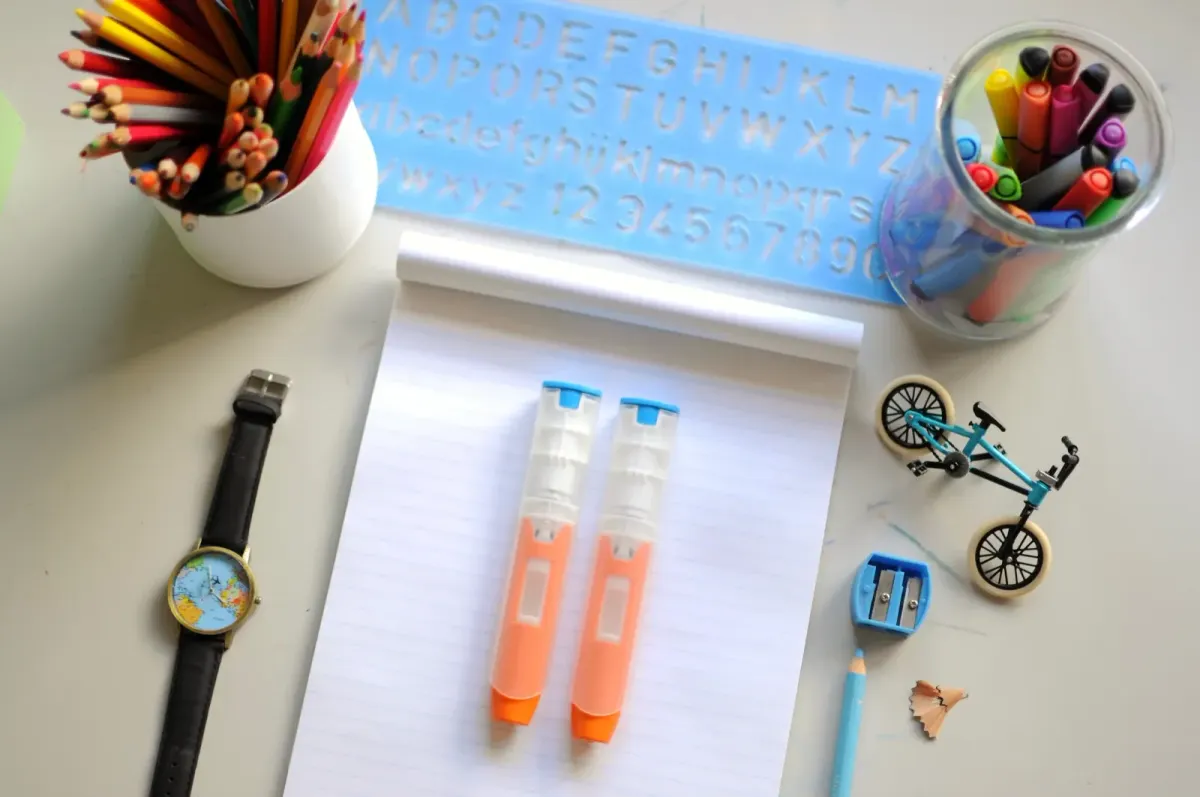
- Spare adrenaline auto-injectors held for emergency use, stocked in pairs and stored so they can be brought to the person within five minutes. They are for emergency use where a child, young person or individual has anaphylaxis, including where their own prescribed device is unavailable or misfires, where they have no prescribed device, or where anaphylaxis presents for the first time. The guidance sets dosage bands of 150 micrograms for children under six and 300 micrograms for individuals aged six and over (guidance expectation, pending Section 100B regulations)
- Allergy awareness training for all staff, not only designated first aiders, covering recognition of allergic reactions, correct use of adrenaline devices, the school’s own policy and pupils’ Individual Healthcare Plans, and how to record and escalate incidents (guidance expectation, pending Section 100B regulations)
- Individual Healthcare Plans for any pupil whose medical condition means the school needs specific support arrangements in place, including pupils still awaiting a formal diagnosis, alongside improved incident recording and lessons-learnt processes (guidance expectation, pending Section 100B regulations)
Schools can lawfully purchase spare adrenaline auto-injectors without an individual prescription under the Human Medicines (Amendment) Regulations 2017; the new guidance does not change that legal basis, it sets out how schools are now expected to use it6.
None of this is new clinical territory. NICE continues to recommend referral to a specialist allergy service after emergency treatment for suspected anaphylaxis, and NICE published its own quality standard on food allergy back in 20167,8. What Benedict’s Law changes is not the underlying clinical advice, but the level of obligation schools are now under to act on it consistently, and, for the policy and review duty specifically, the fact that it is now hard law rather than only guidance.
When did Benedict’s Law come into force?
The Children's Wellbeing and Schools Act 2026 received Royal Assent on 29 April 20264. The Department for Education published the final Allergy safety in schools statutory guidance on 6 July 2026, following a consultation that ran from 5 March to 1 May 20265.
The date that matters legally is 1 September 2026. The Children's Wellbeing and Schools Act 2026 (Commencement No. 3) (England) Regulations 2026 were made on 17 August 2026 and brought Section 34 fully into force on 1 September10. From that date, in-scope schools have had a statutory duty to have an allergy safety policy, to review it at least once every year, and to publicise it, including by publishing it on the school website.
The Section 100B regulations that would make the training, adrenaline stocking, named lead and incident recording expectations directly enforceable have not yet been made. Kent County Council's schools service has reported that the Department intends to bring them in during 2027, though the timing is not confirmed and the Department has not published a date11.
That gap is narrower in practice than it looks. The guidance is statutory, so departing from it needs a justifiable reason, and the duties schools already carried under Section 100, safeguarding law, the Equality Act and the common law duty of care have not changed. Waiting for the regulations is not a neutral position.
Does Benedict’s Law apply to my school?
For most maintained schools, academies and pupil referral units, yes. Maintained nursery schools and 16-to-19 academies are treated differently, so the legal route needs separating out.
For local-authority-maintained schools, including maintained special schools, and for pupil referral units and academies, including free schools and alternative provision academies, the position is clearest: Section 100A already applies directly, requiring a published, annually reviewed allergy safety policy4,5. Maintained nursery schools and 16-to-19 academies fall outside the current scope of the statutory guidance, although the guidance says it should be treated as good practice for these settings.
For non-maintained special schools and independent schools, the Children’s Wellbeing and Schools Act 2026 commits the Secretary of State to extending an equivalent policy duty to them, through amendments to their existing regulatory standards4. Those standards have not yet been made, so this is a duty that is legislatively guaranteed to arrive but is not yet in force.
For colleges and post-16 institutions, the position is similar: the guidance is not itself a new statutory duty, though the Department says these settings should treat it as good practice in meeting duties they already carry under safeguarding law, the Children Act 1989 and the Equality Act 20105. Early years settings, including nurseries, are covered in more detail just below.
Geographically, all of this applies to England only. Scotland, Wales and Northern Ireland each operate under their own existing guidance on supporting children with healthcare needs, published in 2017, 2017 and 2008 respectively, and none have announced an equivalent statutory overhaul2. Multi-academy trusts and groups with settings across more than one nation, or spanning maintained, independent and early years provision, will need to track requirements separately rather than assuming a single policy will cover every site.
Does Benedict’s Law apply to nurseries?
For most nurseries, no, not as a direct legal duty. Section 100A does not create a new allergy safety policy requirement for maintained nursery schools, or for private, voluntary and independent nurseries, pre-schools and childminders. The final guidance is clear, though, that it expects early years settings to treat it as their benchmark for good practice.
Maintained nursery schools, meaning council-run nursery schools that exist as schools in their own right rather than a nursery class within a primary school, are expressly excluded from the settings for which Section 100A is a direct statutory duty4,5.
Standalone private, voluntary and independent nurseries, pre-schools and childminders fall outside Section 100A too, for the same reason: that duty only reaches maintained schools, academies and pupil referral units. They remain governed by the Early Years Foundation Stage framework, and by their existing safeguarding, equality and health and safety duties5.
A nursery class attached to a primary school is not a separate maintained nursery school. The primary school itself sits within the Section 100A framework, but provision for children who are still classed as ‘young children’ for EYFS purposes must continue to follow the Early Years Foundation Stage framework alongside whatever the school does under Section 100A5.
Although non-statutory for nurseries, the guidance remains highly relevant in practice. The final guidance states that early years settings, not just schools, should have a dedicated allergy safety policy with a named senior leader responsible for it, reviewed at least annually and published, alongside allergy awareness training for staff and Individual Healthcare Plans for children who need them5. These are good-practice expectations rather than duties imposed on nurseries by Section 100A, but they set the Government’s stated benchmark for allergy safety in early years settings.
One practical gap is worth knowing about. The legal permission that lets settings buy and hold spare adrenaline auto-injectors without an individual prescription covers schools, including maintained nursery schools, but has not been extended to private, voluntary and independent early years settings5,6. Most nurseries should not assume the spare AAI provisions written for schools apply to them.
Staff training: what the final guidance requires
This is the headline change since the spring consultation, and it settles a question schools and training providers were both waiting on. The final guidance is explicit that first aid training on its own does not satisfy the new allergy awareness training expectation5. A standalone allergy-specific element is required, covering matters that go beyond emergency treatment: recognising the difference between an allergy, an intolerance and coeliac disease, understanding the school’s own allergy policy and how individual pupils’ plans work in practice, correct use of adrenaline auto-injector devices, and how to record and escalate incidents when they happen.
That does not make existing first aid training worthless for this purpose. Paediatric First Aid already covers recognising and responding to anaphylaxis and severe allergic reactions in children, remains a requirement for Ofsted-regulated early years settings, and is a sound foundation to build from. But schools should not treat it as sufficient on its own to meet the new allergy awareness training expectation, and training providers, including us, should not suggest otherwise.
The guidance points towards this training being repeated at least annually, and refreshed for new starters and supply staff as they join.
Review your allergy and first aid training coverage
Constellation Training can review your current Paediatric First Aid and workplace first aid coverage against the new allergy awareness expectations, and help you identify what still needs to be covered before September 2026.
Individual Healthcare Plans and named accountability
Individual Healthcare Plans are not a new concept. Many schools already use them, often based on the BSACI Allergy Action Plan format, to record a pupil’s specific arrangements, triggers and emergency contacts in one place2. What is changing is the breadth of who they cover, and the clarity of ownership behind them.
On breadth, the final guidance is explicit: a child or young person does not need a formal diagnosis to have an Individual Healthcare Plan. Wherever it is clear that a child has medical needs affecting their life at school, including while a diagnosis is still being investigated, arrangements should be put in place and recorded in an IHP5. Schools should not treat the absence of a diagnosis as a reason to wait.
On ownership, this is the second point that changed from the spring draft. The final guidance expects a named member of the senior leadership team to hold responsibility for allergy safety. It does not expect a named governor5. Schools that already have a named governor for this can keep the arrangement as good practice, but it is not something the guidance requires. Section 100B, if and when regulations are made under it, is the mechanism that would eventually turn the named senior leader role into a formal legal duty rather than a guidance expectation.
Will Ofsted inspect allergy safety?
Yes. The final guidance confirms that, as part of its inspection arrangements, Ofsted will consider medical conditions and allergy safety policies, and how effectively schools implement them5. Ofsted has separately reflected this in its inspection materials. Its state-funded schools inspection toolkit was updated in June 2026, for use on inspections from September 2026, and now asks inspectors to check that leaders have arrangements in place to support pupils with medical conditions and a dedicated allergy safety policy9. That does not make allergy safety a standalone, separately graded inspection judgement; it sits within the toolkit’s existing safeguarding evidence gathering. But it does mean schools should expect their policy, training records, Individual Healthcare Plans and incident learning to be capable of standing up to scrutiny, not just to exist on paper.
Practical steps schools can take now
The guidance is published, so there is no longer a reason to wait before acting on it.
- Review your allergy safety policy against the guidance’s four core elements: the policy itself, staff training, spare adrenaline auto-injector stock, and Individual Healthcare Plans
- Confirm who your named senior leader for allergy safety will be; you do not need a named governor for this, though you can keep one if you already have one
- Audit your spare adrenaline auto-injector stock against the guidance’s dosage bands, check expiry dates, and confirm storage is accessible within five minutes rather than locked away
- Map which staff currently hold training that covers anaphylaxis recognition, and identify the gap between that and the standalone allergy awareness content the guidance now expects
- Review existing Individual Healthcare Plans for currency and clarity, and check none have been delayed pending a formal diagnosis where support is already needed
- Publicise your policy in writing to staff, pupils and parents at least once a year, and publish it on your school's website. This has been a direct legal duty since 1 September 2026, not just good practice
Benedict’s Law represents a genuine shift in how seriously allergy management is treated in schools, from something many settings handled well through good practice, to something every in-scope school will be expected to demonstrate. With the guidance now published, the practical work of closing the gap between current practice and the new expectations can start properly.
Talk to us about preparing for compliance

If you are reviewing your school’s allergy policy and training now the guidance is final, Constellation Training can help you understand where your current Paediatric First Aid coverage stands and where the gaps are.
References
1. Department for Education. Stronger protections for children with allergies in school. GOV.UK. Published 4 March 2026, updated 5 March 2026.
2. British Society for Allergy & Clinical Immunology, Anaphylaxis UK and Allergy UK. Model Policy for Allergy Management at School, version 2.1, 2024 (data drawn from Muraro A, et al. The Management of the Allergic Child at School. Allergy. 2010;65(6):681–689).
3. Children and Families Act 2014, Section 100. legislation.gov.uk
4. Children’s Wellbeing and Schools Act 2026, Section 34 (inserting Sections 100A and 100B into the Children and Families Act 2014). legislation.gov.uk. Royal Assent 29 April 2026.
5. Department for Education. Allergy safety in schools. Statutory guidance. Published 6 July 2026. GOV.UK
6. The Human Medicines (Amendment) Regulations 2017 (S.I. 2017/715), regulation 8. legislation.gov.uk
7. National Institute for Health and Care Excellence. Food allergy. Quality standard QS118. 2016.
8. National Institute for Health and Care Excellence. Anaphylaxis: assessment and referral after emergency treatment. NICE guideline NG258. Published 27 May 2026 (replaces and updates CG134).
9. Ofsted. State-funded schools inspection toolkit, updated June 2026 for use on inspections from 7 September 2026. GOV.UK
10. The Children's Wellbeing and Schools Act 2026 (Commencement No. 3) (England) Regulations 2026, SI 2026/933 (C. 75), regulation 2. Made 17 August 2026. legislation.gov.uk
11. Kent County Council schools service (KELSI). Allergy safety in schools. Published 9 July 2026. kelsi.org.uk