
The pressure nobody asks about: fathers' mental health
Father’s Day celebrates dads. International Fathers’ Mental Health Day asks how they are really doing. This article looks at the pressures fathers face, why many stay silent, and what support can help.
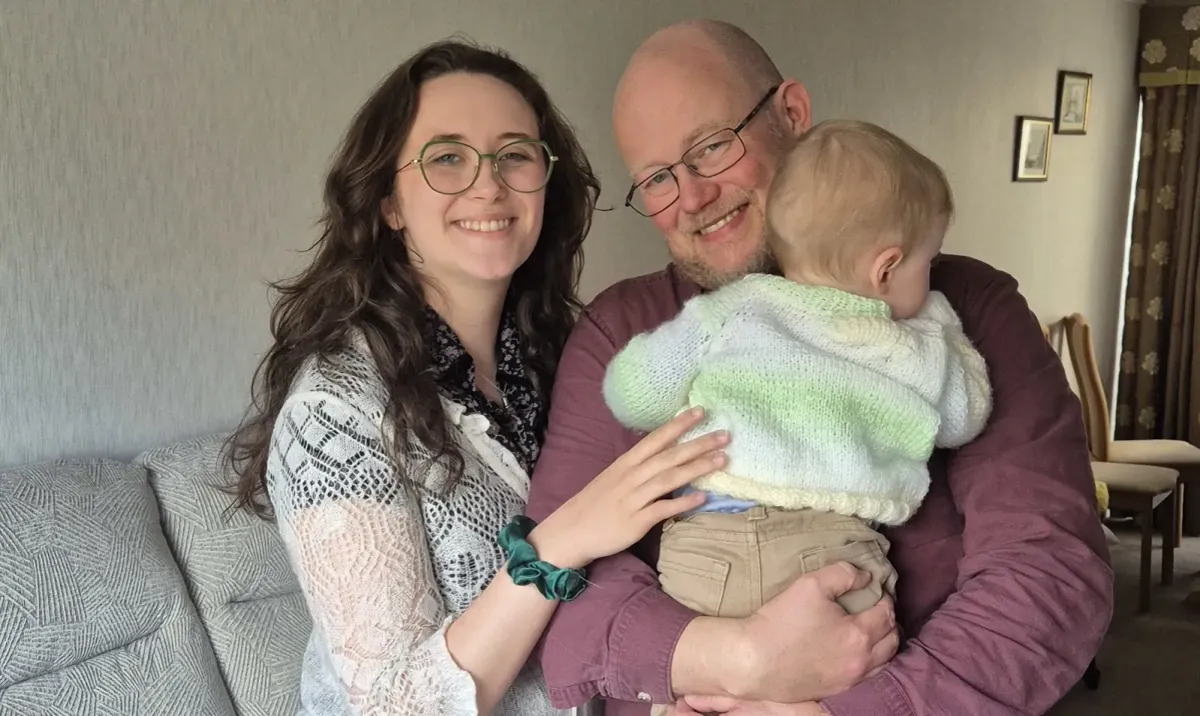
Father's Day asks everyone to celebrate dads. International Fathers' Mental Health Day, observed every year on the Monday after Father's Day, asks something harder: how are they actually doing?
This year that falls on Monday 22 June 2026. The day was founded in 2016 by Welsh advocate Mark Williams and US psychologist Dr Daniel Singley, and it exists for a straightforward reason: the mental health struggles fathers face are poorly understood, under-screened, and rarely talked about.
This post is an overview of what the evidence says. Not a checklist, not a pep talk. Just an honest look at what affects fathers' mental health and why so many of them never mention it to anyone.
The numbers that are probably higher than you think
Around one in ten fathers experiences depression in the period from pregnancy through to the first year after birth. That figure rises to between 25 and 50 per cent when the mother is also experiencing postnatal depression.1,2
Those numbers come from meta-analyses of peer-reviewed research. The actual prevalence is likely higher. Fathers are not routinely screened for postnatal depression in the way mothers are, and many never disclose symptoms even when they are present.1,3
Separate from the perinatal period, suicide in England and Wales is around three times more common among men than women. In 2024, the male rate stood at 17.6 per 100,000 compared with 5.7 per 100,000 for women, the highest male rate recorded since 2000.4,5
These are not peripheral statistics. Fatherhood is one of the most significant transitions a person goes through. The evidence suggests it is also one of the least supported.
What actually causes the pressure
Paternal mental health difficulties rarely have a single cause. Research identifies several overlapping pressures that tend to cluster together in the early years of fatherhood, and that can persist well beyond them.
Role strain and competing demands
Fathers consistently report difficulty balancing work and home life as one of their primary stressors. Qualitative research with UK fathers describes this as "the non-stop-ness of it": returning from a demanding job to the equally demanding reality of early parenting, with little time to decompress between the two.6
Many fathers hold an internalised expectation of being both provider and active parent, and experience significant distress when they feel they are failing at one or both. Research into the perinatal period identifies role conflict as a consistent theme: the sense that taking on the practical and emotional demands of fatherhood sits in tension with a man's previous sense of identity.6,7
Financial pressure
Financial concern is specifically named in the research as a stressor associated with paternal depression. This is not simply about household income: it is about the psychological weight of feeling responsible for financial stability at precisely the point when costs increase and, in many cases, household income falls.8,9
Relationship change
The arrival of a child changes a couple's relationship in ways that are difficult to prepare for. Research consistently identifies relationship dissatisfaction as both a risk factor for paternal depression and a consequence of it. Fathers report their relationships becoming less intimate and more conflicted, and describe feeling excluded from the intense bond between mother and baby.1,10
Maternal depression is one of the strongest predictors of paternal depression. When a mother is struggling, the father is simultaneously trying to manage his own adjustment, support his partner, and care for a new infant, often with reduced social contact and little formal support.2
Sleep deprivation and physical exhaustion
The physical demands of early parenting are well documented. Sleep deprivation affects mood, cognitive function, and emotional regulation. For fathers who return to full-time work shortly after a child's birth, there is often an extended period of functioning on inadequate sleep with limited opportunity for recovery.
Traumatic birth experiences
Complications during labour, emergency interventions, or a partner's serious illness following delivery can have a lasting psychological impact on fathers. This dimension of paternal mental health receives comparatively little attention, but traumatic birth is documented as a risk factor for ongoing psychological distress in fathers.9
Why fathers do not ask for help
Understanding the pressures is only part of the picture. The more difficult question is why so many fathers experience them in silence.
The research is consistent. Masculine norms, self-stigma, and a perception that mental health support is aimed at or more appropriate for women are the primary barriers to help-seeking in men across all age groups. These barriers do not disappear when a man becomes a father: they are compounded by additional factors specific to the perinatal period.11,12
Fathers report that services are organised around mothers. Health visiting, antenatal education, and postnatal check-ins are typically directed at the mother and baby. Fathers describe feeling peripheral: present at appointments but not really included in them. Many are simply unaware that paternal postnatal depression exists.3,13
A 2024 Scottish Government evidence review identified four main barriers: a lack of dedicated services, limited inclusion of fathers in existing perinatal care, low awareness of men's mental health needs, and stigma around help-seeking.14
There is a particular irony here. Men are less likely to seek help for depression, yet research shows that following a first diagnosis, men have up to five times the rate of suicide compared with women. The gap between need and help-seeking is not simply a matter of resilience. It reflects stigma, service design, and a long-standing failure to include fathers properly in mental health conversations.15
Paternal postnatal depression affects approximately one in ten new fathers. The actual prevalence is likely higher: most fathers are not screened, and many do not recognise their symptoms as depression. Work pressure, financial stress, relationship change, and exclusion from services all contribute to why difficulties go unaddressed.
What this means beyond the perinatal period
International Fathers' Mental Health Day has its roots in perinatal awareness, but the pressures on fathers' mental health do not end when a child turns one.
The role-strain and competing demands that characterise early parenthood evolve rather than resolve. Financial responsibility, the effort of sustained involvement in children's lives, the difficulty of maintaining adult relationships and a sense of personal identity alongside the demands of family life: these are long-term pressures, not temporary ones.
And the background context matters. The male suicide rate in England and Wales reached its highest level since the turn of the century in 2024. The age group with the highest rate is 50 to 54, a cohort that includes many fathers of school-age and teenage children. Fatherhood in its later stages carries its own pressures, and the evidence on this period is much thinner than on the early years.4,5
What helps
Evidence on effective support for paternal mental health is less developed than for maternal mental health, partly because the problem has received less research attention. But what exists points in a consistent direction.
Normalising the conversation is foundational. Fathers who are aware that depression and anxiety are common in new parents are more likely to recognise their own symptoms and more likely to seek support. Awareness is not a soft outcome: it is the precondition for everything else.
Opportunistic support in general practice is one of the most practical options currently available. GPs are in a position to ask fathers brief questions about their own mental health during routine contacts. Research suggests this kind of inclusion in existing care pathways, rather than separate specialist services, is what fathers most need and most appreciate.16
For fathers who are struggling, the most immediate step is a conversation with their GP. NHS Talking Therapies (formerly IAPT) is available in England for people experiencing depression or anxiety, and does not require a specific perinatal diagnosis. The Samaritans (116 123) is available at any time.
For families and partners: asking directly, and asking more than once, matters. Fathers are less likely than mothers to volunteer that they are not coping. A specific question gets a different response than a general "are you all right".
References
1. Reay M, Mayers A, Knowles-Bevis R, Knight MTD. Understanding the Barriers Fathers Face to Seeking Help for Paternal Perinatal Depression. Int J Environ Res Public Health. 2024;21(1):16. doi:10.3390/ijerph21010016
2. Paulson JF, Bazemore SD. Prenatal and Postpartum Depression in Fathers and Its Association With Maternal Depression. JAMA. 2010;303(19):1961. doi:10.1001/jama.2010.605
3. British Journal of General Practice. Improving care for fathers with perinatal depression in the community. BJGP. 2024;74(743):246.
4. Office for National Statistics. Suicides in England and Wales: 2024 registrations. ONS; 2025.
5. House of Commons Library. Suicide statistics. Research Briefing CBP-7749. 8 January 2026.
6. Darwin Z, Galdas P, Hinchliff S, et al. Fathers' views and experiences of their own mental health during pregnancy and the first postnatal year. BMC Pregnancy Childbirth. 2017. doi:10.1186/s12884-017-1229-4
7. Watkins AE, El Zerbi C, McGovern R, Rankin J. Exploration of fathers’ mental health and well-being concerns during the transition to fatherhood, and paternal perinatal support: scoping review. BMJ Open. 2024;14:e078386. doi:10.1136/bmjopen-2023-078386
8. British Journal of General Practice (2024), as above (ref 3).
9. Maternal Mental Health Leadership Alliance. Supporting New Fathers: An Overview of Paternal Mental Health Statistics. MMHLA; 2025.
10. Tandfonline. "What Can I Do to Not Have This Life?" Qualitative Study of Paternal PND in UK Fathers. Issues Ment Health Nurs. 2023. doi:10.1080/01612840.2023.2262574
11. Smith et al. Mental health help-seeking behaviour in men. J Adv Nurs. 2024. doi:10.1111/jan.15869
12. British Psychological Society. Public stigma and masculinity: Exploring barriers to men's mental health treatment. BPS; 2025.
13. Reay et al. (2024), as above (ref 1).
14. Fathers Network Scotland. Understanding and Supporting Young Men and Dads [citing 2024 Scottish Government evidence review]. fathersnetwork.org.uk; 2026.
15. Warden et al. Incidence of suicide within two years of a first diagnosis of depression, anxiety, or mixed anxiety and depression. eClinicalMedicine / The Lancet. 2025. doi:10.1016/j.eclinm.2025.103441
16. British Journal of General Practice (2024), as above (ref 3).