Sepsis: What Parents and Childcare Professionals Need to Know
Sepsis can develop rapidly in children following common infections. Here’s what parents and childcare professionals need to recognise, and when to seek urgent medical help

Sepsis is rare, but when it happens, speed matters more than anything else.
Each year in the UK, thousands of children develop sepsis following what began as an ordinary infection. Most recover. Some do not. The difference is often how quickly someone recognises that something is seriously wrong and acts.
If you care for children, at home or professionally, you need to know the warning signs.
What Sepsis Is (And What It Isn’t)
Sepsis is not an infection itself.
It is the body’s extreme and damaging response to an infection. Instead of targeting the illness, the immune system begins harming organs and tissues.
It can follow:
- Chest infections
- Urinary infections
- Infected cuts or bites
- Chickenpox
- Ear infections
- Post-surgical or post-birth infections
A child can deteriorate in hours.
For a detailed look at the biology of sepsis and the history of medical protocols like Martha’s Rule, see our comprehensive guide to sepsis symptoms and treatment
Why It’s Easy to Miss in Children
Children don’t describe symptoms clearly. Babies can’t describe them at all.
Early sepsis can look like:
- “Just a virus”
- Tiredness
- Reduced appetite
- Slight change in behaviour
The key question is not “Is this common?”
It is: “Is this child behaving in a way that worries me?”
If something feels out of proportion to the illness, trust that instinct.
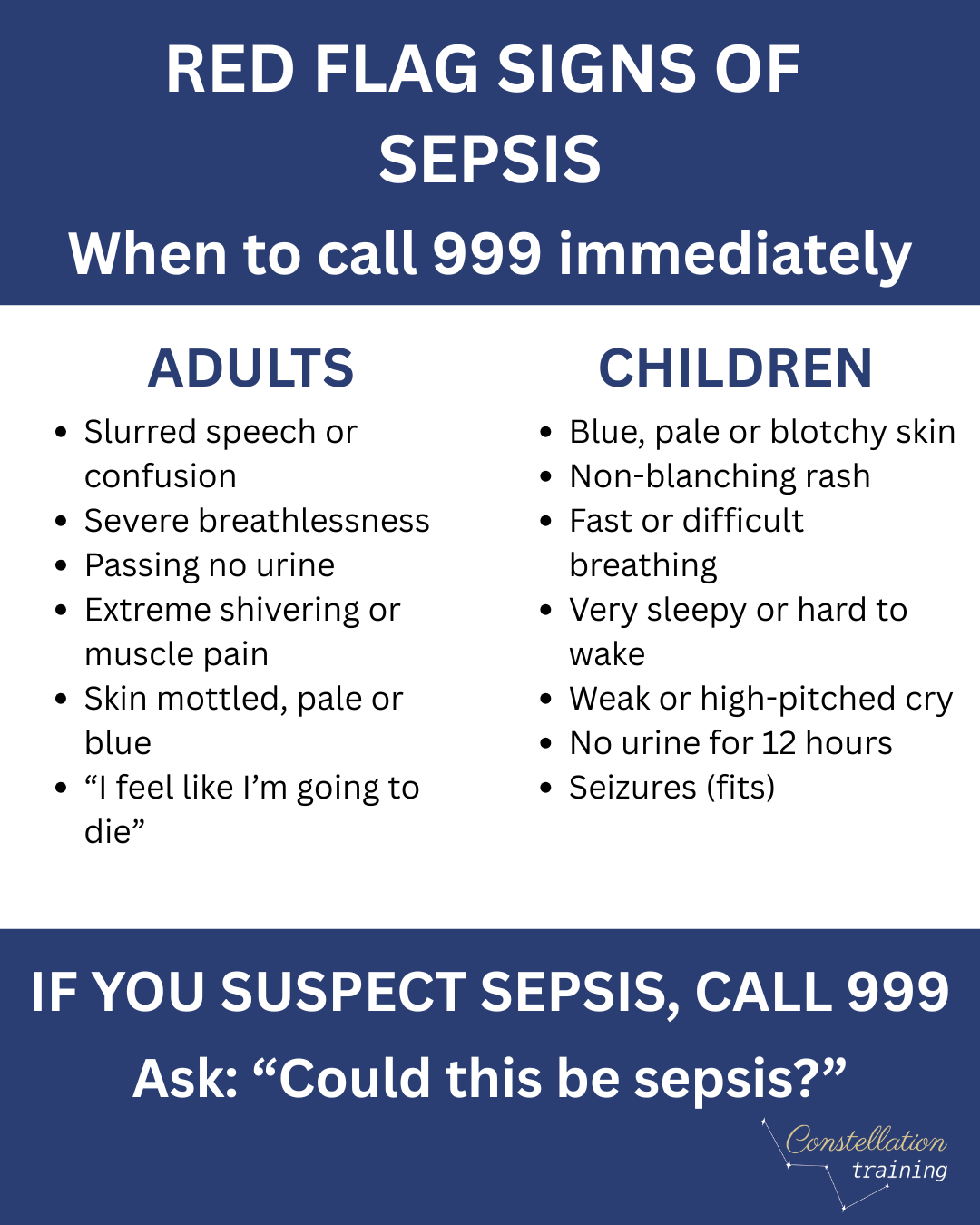
Red Flags: Call 999 or Go to A&E Immediately
If a child with an infection shows any one of the following:
- Pale, blue, mottled or blotchy skin (check palms and soles on darker skin)
- Very fast, laboured or noisy breathing
- Ribs pulling in when breathing
- A weak, unusual or high-pitched cry
- Extreme drowsiness or difficulty waking
- No wet nappies for 12 hours
- Feels abnormally cold
- Floppy, limp or unresponsive
- A rash that does not fade when pressed with a glass
- Seizures (fits)
One sign is enough.
Do not wait for more.
Temperature Isn’t a Reliable Guide
High temperature is common — but not guaranteed.
Some children with sepsis:
- Have a normal temperature
- Or are unusually cold
Relying on fever alone is a common and dangerous mistake.
If You Work in Childcare
You are not diagnosing.
You are recognising deterioration and escalating early.
That means:
- Acting without delay
- Informing parents immediately
- Calling emergency services when red flags appear
- Not adopting a “wait and see” approach with a deteriorating child

You are not expected to make medical judgements beyond your role.
If a child appears significantly unwell, seek medical assessment.
On day two of Paediatric First Aid training, we stress this clearly:
You are not a doctor.
If a child in your care appears significantly unwell, seek medical assessment.
A&E would far rather see a cautious parent or practitioner than a child who arrived too late.
What To Say When You Seek Help
Be clear and direct:
“I’m worried this could be sepsis.”
Those words matter. They prompt faster escalation and assessment.
Then explain:
- What infection the child has (or recently had)
- What has changed
- How quickly the change happened
- Why this feels different from normal illness
Why This Knowledge Matters
A significant proportion of sepsis deaths are preventable with early recognition and treatment. Delay is the biggest risk factor.
In many cases, the first person who notices something is wrong is not a doctor.
It is a parent.
A nursery practitioner.
A teaching assistant.
A childminder.
Knowing when to act can save a life.
Looking for a deeper understanding of the science, history, and the latest UK medical protocols like Martha’s Rule? Read our Comprehensive Deep Dive into Sepsis.
At Constellation Training, we focus on building confident, capable responders — not checklist followers.
If you are responsible for children, that confidence matters.