When the Heat Becomes the Hazard
Heat-related illness is becoming a growing risk in the UK. Learn how to recognise dehydration, heat exhaustion, and heatstroke, and what to do in an emergency.
A complete guide to heat-related illness: what happens to your body, how to recognise the signs, and what to do
Updated 27 June 2026 to reflect this week's record-breaking heatwave.
Looking for the quick version? Our short guide covers the essentials on a single page: https://blog.constellationtraining.co.uk/heat-illness-spot-it-stop-it/
On 26 June 2026, the UK recorded its third consecutive day of a new June temperature record, with a provisional 37.3°C measured at Santon Downham in Suffolk.1 This followed new June highs on 24 and 25 June, and exceeds the previous June record of 35.6°C, set in 1976 and again in 1957.1
The heat did not ease overnight, either. Wales and Northern Ireland set or equalled their own June daily records the same week, and England, Wales and Northern Ireland all provisionally broke their highest overnight minimum temperature records.1 A hot night matters because it removes the recovery window the body normally relies on to bring its core temperature back down before the next hot day begins.
The Met Office issued a Red Warning for Extreme Heat for an unprecedented three consecutive days, the first time this has happened under the current Met Office weather warning system.2 The UK Health Security Agency issued Heat Health Alerts across large parts of England, warning of "population-wide adverse health effects."2
This is the second time in six weeks that the UK has broken a major heat record. At the end of May 2026, Kew Gardens registered a provisional 35.1°C, breaking the all-time UK record for May on two consecutive days.3 Met Office research has found that a May record of that scale is now around three times more likely than it would be in a climate without human-caused greenhouse gas emissions: an event that would once have been expected roughly once a century is now expected roughly once every thirty-three years.3 June 2026 appears to fit the same pattern. These are not isolated freak events. They are what the UK climate now produces with increasing regularity.
The case for taking this seriously is in the mortality figures. During the summer of 2022, when UK temperatures topped 40°C for the first time in recorded history, an estimated 4,507 deaths in England were linked to the heat.4 In summer 2025, the UK’s warmest summer on record, UKHSA estimated 1,504 heat-associated deaths in England, compared with a modelled estimate of 3,039 based on the recent temperature-mortality relationship: 1,535 fewer deaths than the pattern would predict.5 That gap is consistent with proactive alerts, public awareness and NHS preparedness reducing harm, though it does not prove the remaining deaths were unavoidable, and the same pattern of fewer-than-modelled deaths held across all five of summer 2025’s heat episodes.
This guide explains the full spectrum of heat-related illness, from the early warning signs of dehydration to the life-threatening emergency of heatstroke, the parallel risk from UV exposure, and the specific considerations for children, babies, and other vulnerable groups. Our FAIB-accredited first aid courses cover this material in practical, hands-on detail. If you want to know exactly what to look for and what to do when the temperature climbs, this is the information you need.
Why Heat Is More Dangerous Than We Think
There is a persistent tendency in Britain to celebrate hot weather, and understandably so. Sun is rare enough here that most of us welcome it without reservation. That cultural reflex is part of what makes heat dangerous: we are primed to see it as a treat rather than a hazard.
Heat illness does not require lying in direct sunlight for hours. The physiological mechanisms behind heat exhaustion and heatstroke can be set in motion by sustained exposure to warm indoor temperatures, by physical exertion, by poor ventilation, or by any combination of these. A stuffy bedroom on a warm night can do as much damage as an afternoon in the garden.
The human body maintains its core temperature at approximately 37°C. When the surrounding environment becomes hotter than the body can comfortably manage, a cascade of compensatory responses begins: heart rate increases, blood is redirected from internal organs to the skin, and sweating accelerates so that evaporation can carry heat away. These mechanisms work well under moderate conditions, but they have limits, and they depend on conditions the body cannot always get. Sweat only cools effectively if it can evaporate, which is why high humidity is so dangerous even at lower temperatures, and why the record-breaking overnight temperatures of June 2026 mattered as much as the daytime peaks: when the air never properly cools, the body never gets the recovery window it needs.
You do not need to be lying in direct sunlight to develop heat exhaustion or heatstroke
Hot indoor environments, poor ventilation, and physical exertion are enough. Heat does not need direct sunlight to become dangerous.
ONS analysis of temperature and mortality found that all English regions show increased mortality risk once temperatures rise above 22°C, with the greatest risk concentrated above 25°C.4 That threshold was crossed across large parts of England on every day of both the May and June 2026 heat events.
Dehydration: The Body’s Early Warning System
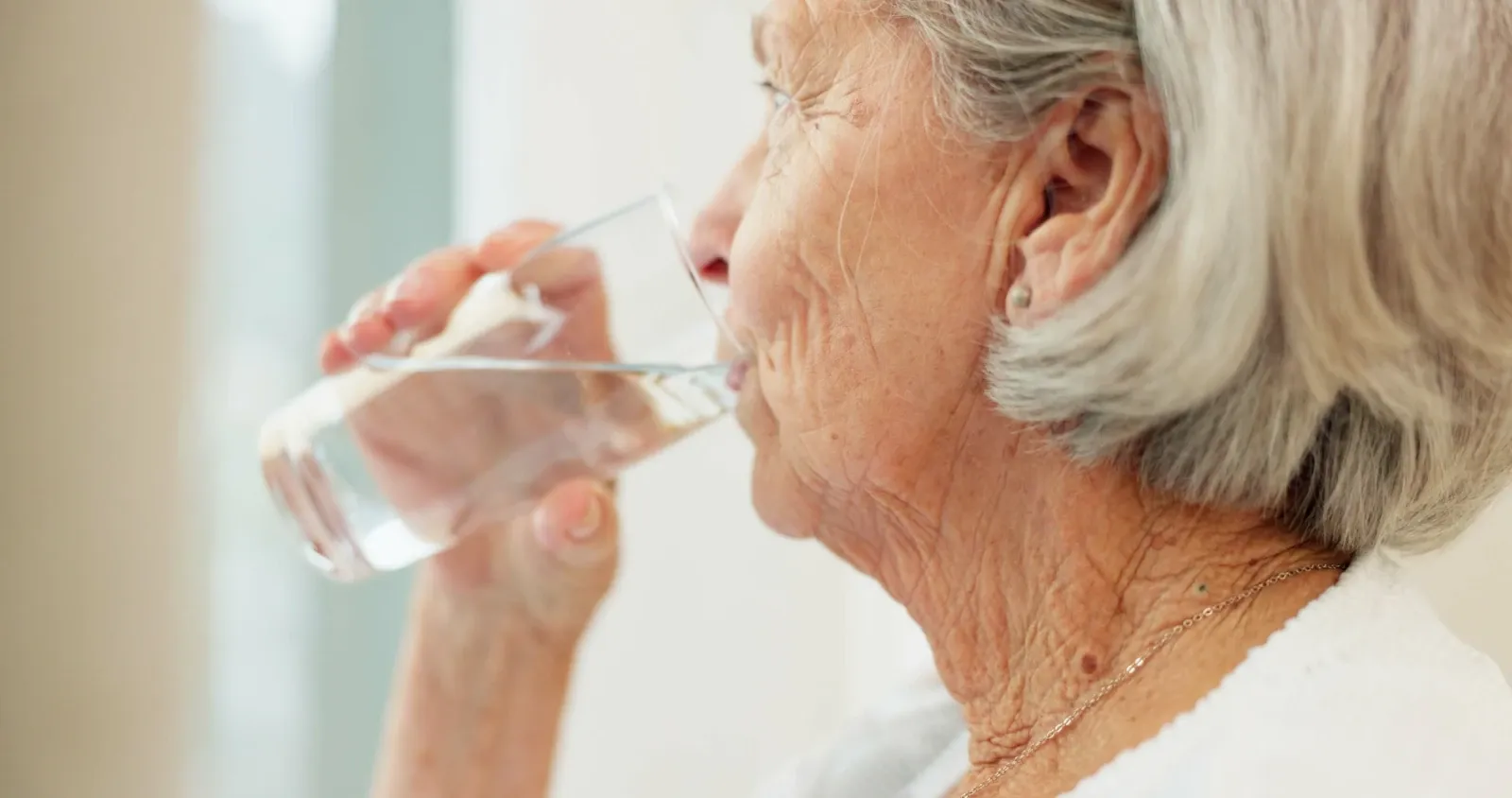
Every heat-related illness is made worse by dehydration, and dehydration is the state most people enter long before they notice it. Thirst is a lagging indicator: by the time it becomes obvious, the body has usually been operating at a fluid deficit for some time, with blood volume already reduced and the heart working harder to compensate.
In hot weather, fluid loss through sweat can be rapid. An adult working or exercising outdoors can lose well over a litre per hour in high temperatures. Older adults have a reduced thirst response, so they often do not register the need to drink until the deficit is already significant. Children have a higher surface area to body weight ratio than adults, which means they lose a proportionally larger amount of fluid relative to their size for the same level of heat exposure.
Recognising Dehydration in Adults
| Mild | Moderate | Severe |
|---|---|---|
| Thirst | Headache | Extreme thirst |
| Dark yellow urine | Very little urine | No urine or very dark brown |
| Dry mouth | Dry mouth and lips | Rapid heartbeat |
| Fatigue | Dizziness or light-headedness | Confusion or disorientation |
| Reduced concentration | Muscle cramps | Fainting or collapse |
What to Do
- Drink water consistently throughout the day, not just when thirsty.
- During exercise or heavy work in heat, consider a sports rehydration drink to replace lost salts as well as fluids.
- Avoid alcohol and excessive caffeine, both of which increase fluid loss.
- Pale, straw-coloured urine is the best simple indicator of adequate hydration.
- If someone shows signs of moderate dehydration, rest them in a cool area and give water or a rehydration solution. If they cannot keep fluids down or symptoms worsen, seek medical attention.
Severe dehydration is a medical emergency
If someone is confused, unresponsive, or unable to drink, call 999.
Heat Exhaustion: The Stage Where Action Matters Most
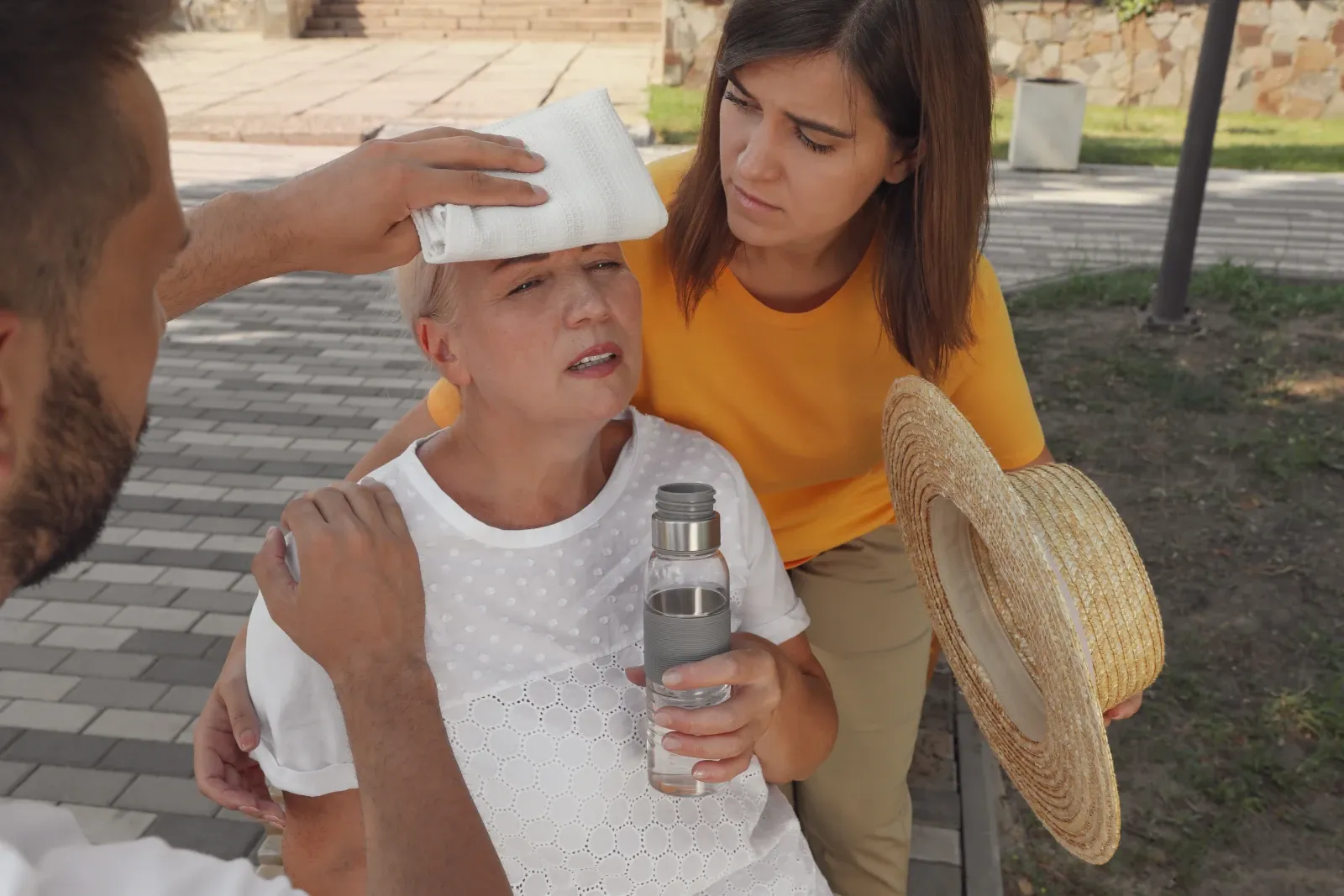
Heat exhaustion is the body’s distress signal. It occurs when the thermoregulatory system is under severe strain, with the heart working hard and blood pulled toward the skin to shed heat, but the system has not yet failed completely. It is the stage at which intervention makes the most difference: treated promptly, most people recover fully within half an hour. Left unaddressed, it progresses to heatstroke, at which point the situation becomes life-threatening.6
A person developing heat exhaustion will typically be sweating heavily, with skin that looks pale or ashen and feels unpleasantly clammy. Headache, dizziness and nausea are common, often alongside muscle cramps and a general sense of weakness. The pulse becomes rapid but weak, and although body temperature may be raised, it is usually still below 40°C. Crucially, a person at this stage is still conscious and able to communicate, even if they feel unwell, which is one reason heat exhaustion is so often missed: people experiencing it do not always connect how they feel to the heat around them.
Signs and Symptoms
- Heavy sweating
- Pale, ashen, or clammy skin
- Headache
- Dizziness or light-headedness
- Nausea or vomiting
- Muscle cramps
- Weakness or fatigue
- Rapid, weak pulse
- Temperature may be raised but usually below 40°C
What to Do: The Four-Step Response
Step 1: Move them to a cool place
Get the person out of direct sun immediately. Indoors with a fan or air conditioning is ideal. Shade is the minimum. Cooler air allows the body to begin shedding heat.
Step 2: Remove excess clothing
Remove jackets, jumpers, footwear, and socks. The more skin exposed to cooler air, the faster the body can cool. Tight clothing around the neck or waist should be loosened.
Step 3: Cool the skin actively
Sponge or spray with cool, not ice-cold, water. Focus on the neck, armpits and groin, where large blood vessels run close to the surface, so heat is carried away from the core more efficiently. Fanning while wet accelerates cooling significantly, and cold packs wrapped in a cloth applied to these areas are effective.
Step 4: Give fluids
If the person is conscious and able to swallow, give cool water or a sports rehydration drink. Small, regular sips are better than large amounts at once. Do not give alcohol.
Monitor the person continuously throughout. The NHS advises that heat exhaustion should begin to improve within thirty minutes of these measures.6 If they are still unwell after 30 minutes, or if symptoms worsen at any point, call 999 and follow the call handler’s advice. Do not drive yourself to A&E.
Call 999 for heat exhaustion if:
Still unwell after 30 minutes of cooling and rest
Confusion or unusual behaviour develops
Skin stops sweating and becomes hot and dry
They lose consciousness
They have a seizure
You are in any doubt
What Is the Difference Between Heat Exhaustion and Heatstroke?
Heat exhaustion is the body still fighting to cool itself; heatstroke is that cooling system failing outright, with core temperature climbing past 40°C and brain function affected, a medical emergency that needs an immediate 999 response.
The transition can happen quickly. In classic heatstroke, brought on by ambient heat rather than exertion, the skin is often hot and may be dry because sweating and heat loss are failing, but this is not a reliable test on its own.12 In exertional heatstroke, brought on by intense physical activity, the person may still be sweating heavily. The signs that matter most regardless of sweating are confusion, agitation or unusual behaviour, loss of coordination, a seizure, loss of consciousness, or simply failing to improve after 30 minutes of cooling. Treat any of these as heatstroke and call 999.
Signs of Heatstroke
| Sign | What It Means |
|---|---|
| Core temperature 40°C or above | Thermoregulation has failed |
| Hot skin, often dry; sweating may stop | The cooling mechanism is impaired, though exertional heatstroke can still involve heavy sweating |
| Confusion, agitation or unusual behaviour | The brain is under direct heat stress |
| Loss of coordination | Neurological impact of extreme temperature |
| Rapid, strong pulse | Cardiovascular system under extreme stress |
| Rapid, shallow breathing | Compensatory response |
| Seizures | Neurological emergency |
| Unconsciousness | Requires immediate 999 response |
What to Do: Call 999 First
Call 999 immediately. Do not wait to see if the person improves. Do not drive them to hospital yourself unless specifically advised to by the 999 call handler.
While waiting for the ambulance:
- Move the person to the coolest available environment.
- Remove outer clothing.
- Wrap them loosely in a cold, wet sheet or clothing and pour cold water over it continuously.
- If no sheet is available, sponge the body with cold water and fan them aggressively.
- Apply ice or cold packs wrapped in cloth to the armpits, groin, neck, and scalp.
- If they are conscious and able to swallow, give sips of cool water.
- If they lose consciousness, place them in the recovery position and continue cooling.
- Do not give paracetamol or aspirin. These are ineffective for heat-related temperature elevation and may cause harm.
Stop cooling when
Their temperature returns to normal and their skin feels cool to the touch.
Replace the wet sheet with a dry one and keep them resting until the emergency services arrive.
Heat Exhaustion vs Heatstroke: Quick-Reference Comparison
| Heat Exhaustion | Heatstroke |
|---|---|
| Sweating heavily | Hot skin, often dry; sweating may stop |
| Pale, clammy skin | Flushed, hot skin |
| Usually below 40°C, but don’t rely on temperature alone | Often around 40°C or above, but treat confusion, seizure or collapse as decisive |
| Conscious and coherent | Confused, agitated, or unconscious |
| Recovers with first aid in 30 mins | Life-threatening: requires 999 |
| NHS 111 if concerned | Call 999 immediately |
UV and Sunburn: The Parallel Risk
Throughout the heat illness sequence above, UV exposure runs as a parallel and compounding risk. Sunburn is often treated as a minor inconvenience. It is not: it is a radiation injury. UV radiation damages DNA in skin cells, triggers an inflammatory reaction that does not peak until somewhere between twelve and twenty-four hours after exposure, and suppresses the skin’s local immune response. It also impairs the skin’s ability to manage heat exchange at its surface, which is why a sunburned person is more vulnerable to heat exhaustion than someone with undamaged skin: the body has lost some of its own cooling capacity at exactly the point it needs it most.
The UV index in the UK during a heatwave can reach 8 or higher, classified as very high.13 At that level, unprotected skin can begin to burn in under fifteen minutes. Cloud does not block UV, so an overcast hot day still carries significant risk.
The NHS advises spending time in the shade when the sun is strongest, between 11am and 3pm in the UK from March to October, using a sunscreen of at least SPF 30, and keeping babies under six months out of direct sunlight altogether.14
- Apply broad-spectrum SPF 30 or higher sunscreen with good UVA protection, ideally rated at least 4 stars, thirty minutes before going outdoors, and reapply every two hours or after swimming.
- Reapplication is not optional. Most people apply too little, and correctly applied sunscreen still degrades with time and perspiration.
- Protective clothing and shade are more effective than sunscreen alone for prolonged outdoor exposure.
- Commonly missed areas include the face, scalp, backs of hands, tops of feet, backs of ears, and the back of the neck.
Children and Babies: A Higher-Risk Group
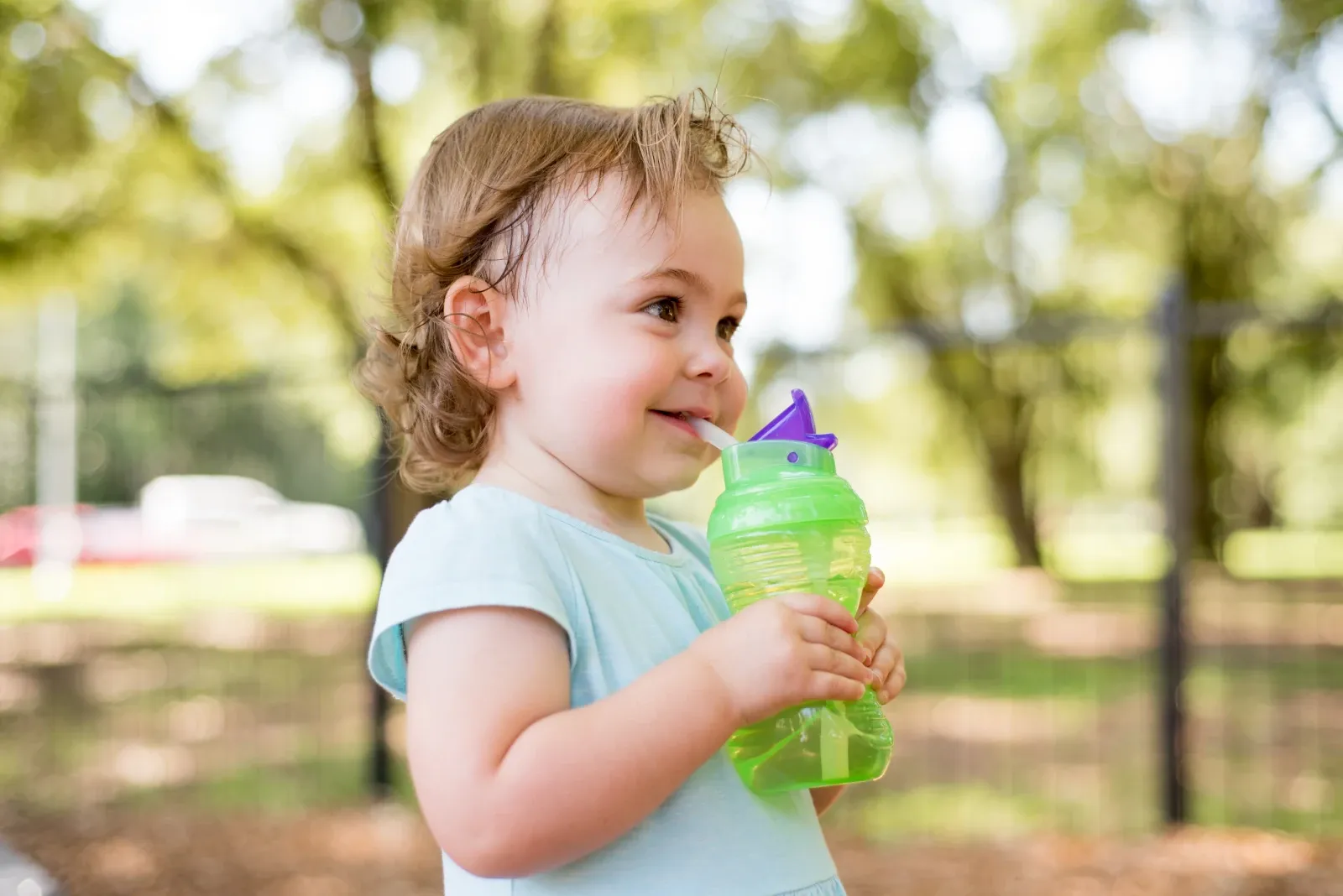
Children are not simply smaller adults when it comes to heat risk. Their higher surface area to body mass ratio means they absorb heat from the environment more rapidly relative to their size, and their thermoregulatory systems, including sweat gland density and the autonomic responses that control them, are less mature and less efficient than an adult’s. They also rely entirely on the adults around them to recognise that they are overheating: young children and babies cannot communicate discomfort clearly, so early signs can go unnoticed, and children are often physically active during hot weather in a way that accelerates fluid loss further.
An additional hazard specific to children is the risk of being left in a hot car. When the outside temperature is 34°C, the interior of a parked car can reach 52°C within twenty minutes.7 A child’s core temperature can reach dangerous levels with frightening speed. A child should never be left alone in a car in warm weather, even briefly, and even in shade.
Recognising Heat Illness in Children
Sheffield Children’s NHS Foundation Trust advises that the first sign a child is overheating is often irritability or a complaint of headache, sometimes alongside a flushed face, heavy sweating, or unusual lethargy and reluctance to play.8 If this happens, act immediately: move them to a cooler environment, remove clothing, and give fluids. Do not wait for signs to worsen.
The NHS notes that heat exhaustion in children largely mirrors the adult symptoms above, with the addition that children frequently become notably irritable.9 In babies, watch in particular for skin that is pale and clammy, crying more than usual or being unusually difficult to settle, a fontanelle (the soft spot on the head) that appears sunken, fewer wet nappies than normal, and rapid breathing, all of which point toward dehydration alongside the heat stress.
In babies and toddlers, deterioration may show as unusual drowsiness, restlessness, difficulty settling, or becoming hard to rouse. Treat any rapid worsening as an emergency.
Call 999 immediately if a child or baby shows:
Confusion, unusual drowsiness, or becomes unresponsive
Hot, dry skin without sweating
Seizure or convulsion
They cannot be roused
Cooling a Child or Baby
- Move immediately to a cool, shaded, or air-conditioned space.
- Remove outer clothing, and nappy for babies.
- Use a cool, damp flannel or sponge, focusing on the armpits, neck and groin.
- A cool, not cold, water spray is effective and less distressing than immersion.
- Do not apply ice packs or ice-cold water directly to a child’s skin.
- Fully breastfed babies under six months do not need extra water, but may want to breastfeed more often in hot weather.
- Formula-fed babies under six months may be offered small sips of cooled, boiled water as well as their usual milk feeds.
- From around six months, once solids have started, offer sips of water from a cup or beaker, with extra water in hot weather.
- If using a cool bath, do not leave the child unattended, and ensure the water is not so cold it causes shivering, which generates heat rather than removing it.
Breastfeeding mothers need particular attention during hot weather. Milk production depends on adequate maternal hydration, and the additional fluid demands of lactation mean that a mother who is not drinking enough will notice a reduction in supply before she feels significantly thirsty. In hot conditions, breastfeeding mothers should increase fluid intake beyond their usual daily amount, aim for pale straw-coloured urine as the simple indicator of adequate hydration, and not wait for thirst to prompt drinking. A dehydrated mother is also at elevated risk of heat exhaustion herself, which creates a secondary risk to the baby if she becomes too unwell to feed or care for them.
UV Protection for Children
The UV guidance for children follows the same principles as adults, with some age-specific adjustments:
- Keep babies and young children out of direct sun, particularly between 11am and 3pm when UV is at its peak.
- Shade, a wide-brimmed sun hat, and UV-protective clothing are the primary defences.
- Sunscreen is not recommended as the first line of protection for babies under six months. Shade and clothing are preferred.
- For children over six months, use SPF 30 or higher on all exposed areas and reapply regularly.
- Dress children in loose, light-coloured, breathable fabrics.
Who Is at Greatest Risk
UKHSA data from 2024 showed that the highest heat-associated mortality rate was among people aged 85 and over, at 521 deaths per million people.10 But age is not the only factor that determines risk, and several of the groups below have nothing to do with age at all.
| Group | Why They Are at Greater Risk | Key Action |
|---|---|---|
| Older adults (65+) | Reduced thirst response, less efficient thermoregulation, more likely to be on interacting medications | Regular check-ins, ensure hydration, cool environment |
| Babies and young children | Less mature thermoregulation, higher surface to mass ratio, rely on carer recognition | See dedicated section above |
| Pregnant women | Increased metabolic rate and blood volume create additional heat load | Extra hydration, avoid direct sun, rest in cool spaces |
| People with heart or lung conditions | Cardiovascular strain from heat is compounded by existing conditions | Follow clinical advice; call 111 proactively during a heatwave |
| People with diabetes | Some people with diabetes may have impaired sweating or higher dehydration risk | Monitor closely; stay hydrated |
| People on certain medications | Diuretics, antipsychotics, and antihistamines can all affect heat tolerance | Consult a GP if concerned during a heatwave |
| People doing outdoor physical work | Exertion multiplies heat generation significantly | Regular breaks in shade; consistent hydration |
Managing the Indoor Environment
It is a common misconception that staying indoors automatically means staying safe in a heatwave. Indoor temperatures in UK homes, particularly those with poor ventilation or south-facing windows, can remain dangerously high long after outdoor temperatures have peaked, and the record overnight minimums recorded across England, Wales and Northern Ireland during the June 2026 heatwave are a reminder that this risk does not switch off after dark.
The NHS advises keeping curtains and blinds closed on south and west-facing windows during the hottest part of the day, and opening windows in the early morning and evening when outdoor air is cooler.6 Electrical equipment and lighting generate heat, so turning them off when not in use makes a meaningful difference. If you are responsible for managing heat risk in a workplace rather than at home, our companion guide on workplace heat safety for employers covers the legal duties and practical controls in more depth.
- Closing curtains and blinds during peak sun hours significantly reduces indoor temperature.
- Ground-floor rooms and north-facing rooms are generally cooler.
- Electric fans are effective at lower ambient temperatures but have limited benefit once air temperature exceeds skin temperature.
- A cool shower or bath lowers core body temperature directly.
What Should You Never Do When Treating Heat Exhaustion or Heatstroke?
Never give ice-cold drinks too quickly, apply ice directly to bare skin, give paracetamol or aspirin for heat-related fever, or leave the person alone: each of these can make the situation worse rather than better.
| Do Not | Why Not |
|---|---|
| Give ice-cold water to drink rapidly | Can cause nausea, vomiting, and shock in someone already compromised |
| Apply ice directly to bare skin | Risk of cold burn; can also trigger shivering, which generates heat |
| Give paracetamol or aspirin for heat-related fever | Ineffective for heat illness and potentially harmful |
| Leave the person alone | Heatstroke can deteriorate rapidly; they need continuous monitoring |
| Drive yourself or the casualty to A&E | You may lose consciousness. Call 999 and wait for the ambulance |
| Wait and see if a person becomes confused | Confusion signals serious neurological heat stress. Act immediately |
| Offer alcohol or caffeinated drinks | Both accelerate fluid loss and worsen dehydration |
The Broader Picture: This Is Not a One-Off
Dr Garyfallos Konstantinoudis of Imperial College London has described heatwaves as "silent killers,"11 because the people who die in them typically have pre-existing conditions, and heat itself is rarely listed as a contributing cause of death on the certificate. The deaths are real, but they are systematically undercounted, which makes it easy to underestimate how serious a heatwave like this actually is.
Between 2020 and 2024, UKHSA heat mortality monitoring recorded more than 10,000 heat-associated deaths in England during summer heat episodes.10 Despite this, the 2025 data provides genuine grounds for optimism: the UKHSA estimated that proactive heat health alerts and NHS preparedness prevented roughly 1,500 deaths in summer 2025 compared to the modelled baseline.5 Awareness, preparation, and timely action work. With May and June 2026 both having already broken major national temperature records, and with the Met Office’s own attribution research showing this scale of heat is now several times more likely than it would have been a generation ago, that is the case this guide is making: a dangerous heatwave and a survivable one are usually separated by how quickly the people around the casualty recognise what is happening.
If Someone Is in Trouble
To summarise the action thresholds:
| Condition | Signs to Watch For | Action |
|---|---|---|
| Dehydration (moderate) | Dark urine, dizziness, no urine output | Rest, fluids. Call 111 if worsening |
| Heat exhaustion | Heavy sweat, pale skin, headache, nausea | Cool, shade, fluids. Call 999 if not improving within 30 minutes |
| Heatstroke | Hot dry skin, confusion, temp 40°C+, seizure | Call 999 immediately. Cool aggressively while waiting |
Knowing what to look for is the first step. The second is acting on it without hesitation. Every minute matters once heatstroke takes hold.

Be ready before the next heatwave arrives
Constellation Training delivers FAIB-accredited first aid courses throughout the UK, covering emergency response to heat-related illness as part of wider first aid training.
References
[1] Met Office. ‘Third consecutive day of a new June temperature record with end of heatwave in sight’. 26 June 2026. Available at: www.metoffice.gov.uk
[2] Met Office. ‘Met Office issues Red Warning for Extreme Heat for record third consecutive day’. June 2026. Available at: www.metoffice.gov.uk
[3] Met Office. ‘UK May and spring temperature record provisionally broken for second day in a row’. May 2026. Available at: www.metoffice.gov.uk
[4] Office for National Statistics. ‘Climate-related mortality, England and Wales: 1988 to 2022’. September 2023. Available at: www.ons.gov.uk
[5] UK Health Security Agency. ‘New UKHSA data shows 1,504 heat-related deaths during summer of 2025’. 2026. Available at: www.gov.uk
[6] NHS. ‘Heat exhaustion and heatstroke’. Available at: www.nhs.uk
[7] KidsHealth. ‘Heat cramps, heat exhaustion, and heatstroke’. Available at: www.kidshealth.org
[8] Sheffield Children’s NHS Foundation Trust, cited in British Red Cross. ‘Heatstroke first aid’. Available at: www.redcross.org.uk
[9] British Red Cross. ‘Heat exhaustion first aid for babies and children’. Available at: www.redcross.org.uk
[10] UK Health Security Agency. Heat mortality data 2024. Available at: www.gov.uk
[11] London School of Hygiene & Tropical Medicine / Imperial College London. ‘Nearly 600 heat-related deaths expected in UK heatwave’. June 2025. Available at: www.lshtm.ac.uk
[12] Mayo Clinic. ‘Heatstroke: First aid’ and ‘Recognizing and preventing heat-related illness’. Available at: www.mayoclinic.org
[13] Met Office. ‘What is UV radiation and how does it affect your health?’ Available at: www.metoffice.gov.uk
[14] NHS. ‘Sunscreen and sun safety’, and ‘Keeping your baby safe in the sun’. Available at: www.nhs.uk