The Clock Goes Forward. Your Health Goes Backwards.
When the clocks go forward, most people lose an hour and carry on. But the evidence suggests the spring time change can affect sleep, alertness, heart health, and road safety. Here is why the lost hour matters, and why first aid knowledge still matters too.
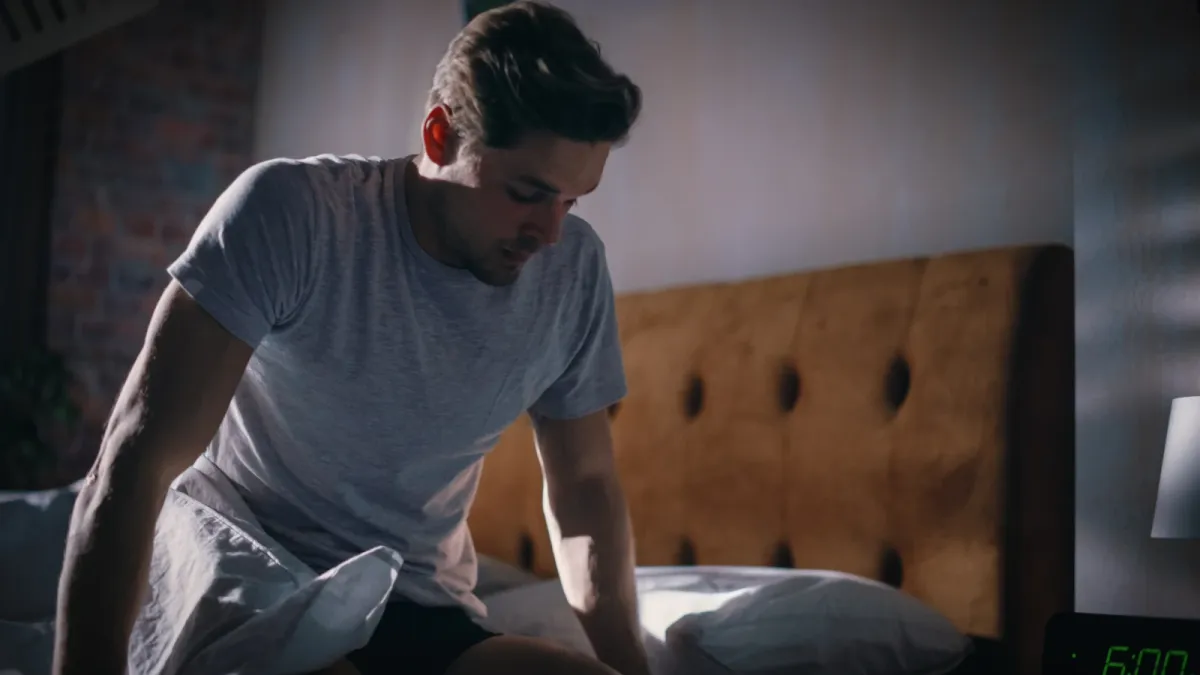
Why daylight saving time is worse for you than you think, and why this is the perfect moment to brush up on your first aid.
Every year, sometime in late March, the nation collectively loses an hour of sleep and pretends it is fine. The clocks go forward, we grumble briefly about the light evening and the dark morning, and we carry on.
Except we are not fine. Not immediately, anyway.
The shift to British Summer Time is a genuinely useful thing in many respects: lighter evenings, more time outdoors, the first real signal that winter is losing its grip. But the transition itself, those first few days after the clocks change, carries a measurable and well-documented cost to human health. Not a vague, could-be-coincidence cost either.
A real one, tracked in cardiovascular units and road accident statistics.
Here is what actually happens to your body when society collectively decides to relocate an hour of the day.
Your Body Does Not Know What a Time Zone Is
Human beings run on a biological clock called the circadian rhythm. It governs sleep, body temperature, hormone release, digestion and immune function, among other things. It is calibrated primarily by light, which is why shift workers, jet-lagged travellers, and parents of newborns tend to feel comprehensively terrible.
When the clocks move forward, your environment shifts by an hour but your circadian rhythm does not. It takes the average adult approximately a week to fully adjust, and some people take considerably longer. During that window, you are, in a very real physiological sense, jet-lagged. You have not flown anywhere. You have simply been told that the clock now says something different, and your body is unimpressed.
The effects are not dramatic. You will not keel over. But they are cumulative and, for some people, they tip the balance in ways that matter.
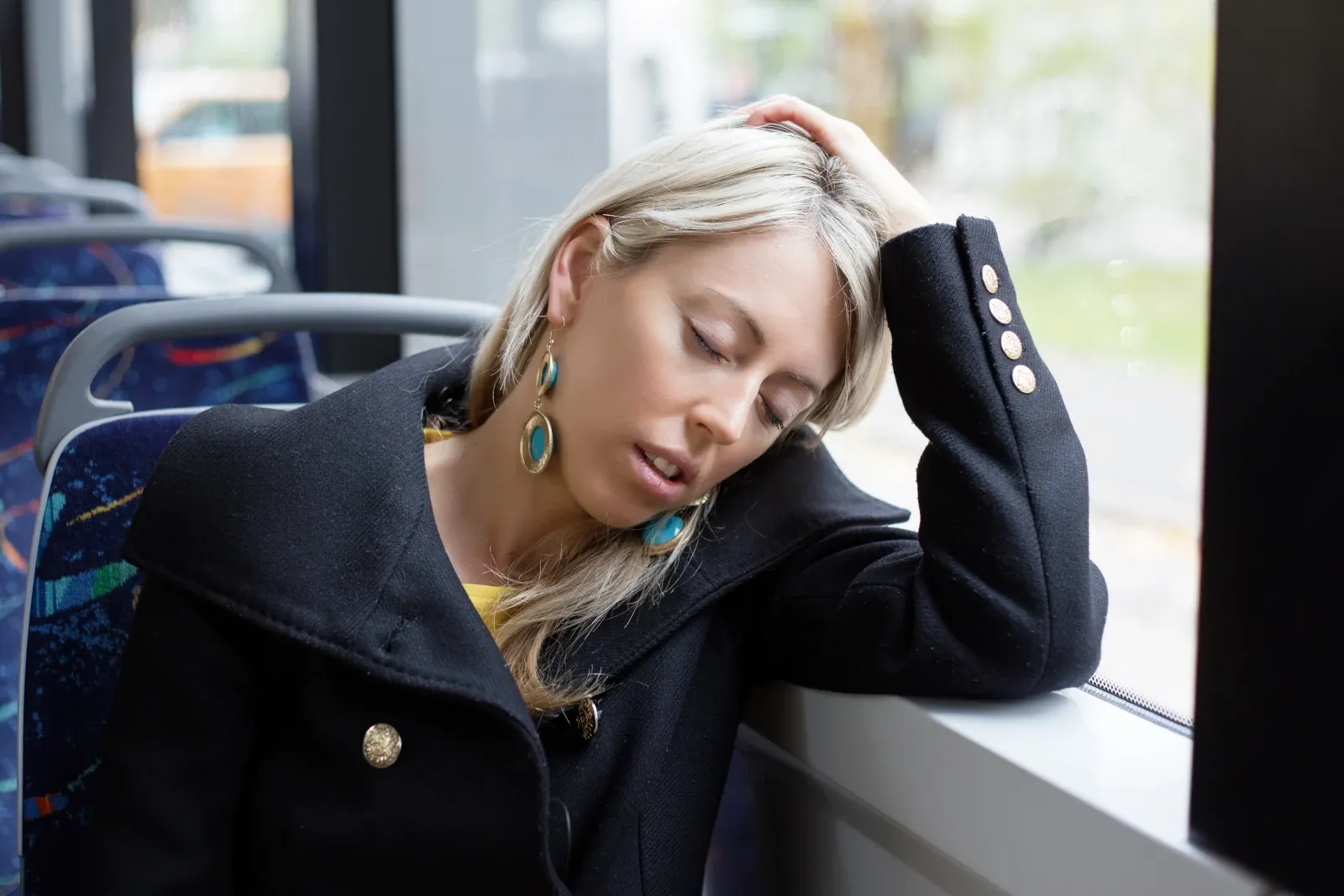
The Heart Attack Numbers Are Not Reassuring
Research published in the New England Journal of Medicine found an association between the spring clock change and a significant increase in heart attacks on the Monday that follows, with some studies suggesting rises of around 20 to 25 per cent.[1] A subsequent review of the evidence reached similar conclusions.[2] That is a meaningful effect. For context, the equivalent autumn clock change, when we gain an hour of sleep, is associated with a reduction in cardiac events, which lends weight to the idea that sleep disruption is the underlying driver.
The proposed mechanism is not complicated: sleep disruption increases inflammation, elevates cortisol, and affects blood pressure.[3] None of those things are good for the cardiovascular system. If someone already has underlying heart disease, narrowed arteries, or elevated blood pressure, that one lost hour of sleep introduces extra strain at precisely the wrong moment.
The effect is particularly pronounced in the first three days after the change, then gradually normalises as the body adjusts. The autumn mirror-image effect adds further support to a genuinely circadian rather than coincidental explanation.
The Roads Get More Dangerous Too
Sleep deprivation and road traffic accidents have a well-established relationship. A 2020 chronobiological study found that fatal crashes in the United States increased by around 6 per cent in the days following the spring clock change.[4] UK and European data show similar patterns, with some studies finding the effect extends across the first week of the change rather than concentrating on a single day.
The logic is straightforward. A tired driver has slower reaction times, reduced peripheral awareness, and is more susceptible to microsleeps at low-stimulation points in a journey: motorways, familiar routes, long straight roads. The clock change does not make everyone dangerously tired. But it nudges a population that was already, as a whole, chronically under-rested, a little further toward impairment.
It is worth noting that the darker mornings that follow the spring change contribute independently. Commuters who were driving in relative daylight suddenly find themselves navigating in the dark again, compounding the risk.
Other Things That Get Worse (Briefly, But Measurably)
Cardiac events and road accidents are the headline figures because they are the most serious, but the research on daylight saving transitions includes a broader catalogue of effects:
- Workplace injuries increase in the days following the spring change, with one study finding a 5.7 per cent increase in mining injuries and a 67 per cent increase in the number of days lost to those injuries.[5]
- Stroke rates show a small but statistically significant increase in the first two days after either clock change, suggesting that circadian disruption creates vulnerability beyond just cardiac events.[6]
- Mental health: hospital admissions for depression and self-harm show a modest increase in the days following the spring change. The loss of morning light and disrupted sleep rhythm are the likely contributors.[3]
- Cognitive performance drops temporarily. Concentration, reaction time, and short-term memory are all measurably worse when sleep is disrupted, which has obvious implications for anyone whose job involves precision, machinery, or decision-making under pressure.
For employers, this is not abstract. The days following the clock change are associated with higher accident rates and reduced concentration across safety-critical roles. This is a short-term but predictable increase in operational risk, and predictable risk is the kind you can do something about.
Why Has Nobody Fixed This?
Reasonable question. The European Parliament voted in 2019 to end the practice of seasonal clock changes across the EU. Then various member states disagreed about which time to keep permanently, the pandemic happened, and the legislation stalled.
The scientific community has been less equivocal. The American Academy of Sleep Medicine, in a position statement endorsed by more than 20 professional bodies including the World Sleep Society, concluded that the evidence supports abolishing seasonal time changes entirely in favour of permanent standard time.[3] The concern is not just the acute disruption of the transition, but the chronic effects of running on what researchers call social jet lag: the mismatch between your biological clock and the artificial clock imposed by society. That misalignment has been linked to increased risk of cardiovascular disease, metabolic syndrome, and depression.
To be fair to the evidence, a 2026 systematic review published in the European Journal of Epidemiology concluded that the picture is not uniformly bleak: some effects of DST, including on all-cause mortality during summer months, appear neutral or modestly beneficial.[7] The acute risk window around the spring transition, however, is one of the most consistent findings across the literature. That is the bit that matters here.
In the UK, the question of clock changes is a long-running and surprisingly contentious debate. Farmers, parents of young children, road safety campaigners, and Scottish politicians have all been involved at various points, often pulling in opposite directions. The current position is that the UK continues to observe daylight saving time, and there is no imminent legislation to change that.
So for the foreseeable future, the clocks will keep going forward in March, the nation will keep losing an hour, and the associated health effects will keep showing up in the statistics. Worth knowing about, even if you cannot single-handedly change government policy.
What You Can Actually Do About It
Some of this is within your control. Adjusting your sleep schedule gradually in the days before the change (moving bedtime and wake time forward by 15 to 20 minutes each night) reduces the abrupt disruption. Avoiding alcohol in the days around the change helps, since alcohol fragments sleep architecture and worsens the adjustment. Being cautious on the roads, particularly on the Monday after the change, is simply sensible given what the data show.
This is where it stops being theoretical.
The post-clock-change period represents a genuine, evidence-based spike in the risk of cardiac events and road traffic incidents. Both of those are situations where someone nearby with first aid knowledge can change the outcome entirely.
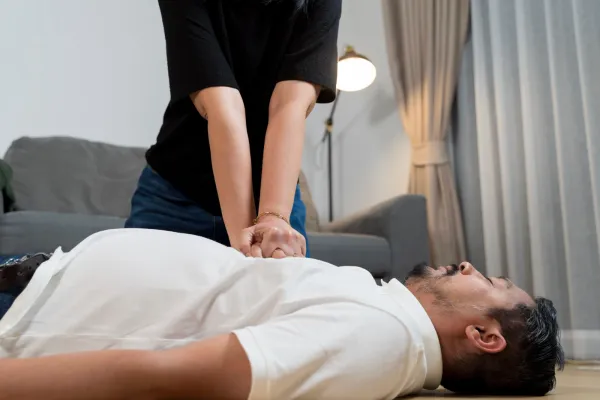
A cardiac arrest met within minutes by someone who can perform effective CPR has a dramatically better chance of survival than one where bystanders stand and wait for an ambulance. A road traffic collision where at least one person present knows how to manage bleeding, check airways, and keep an injured person stable pending emergency services arrival is a far better situation than one where nobody knows what to do.
When Did You Last Refresh Your First Aid?
The question is worth asking seriously. A first aid certificate completed three years ago is not the same as current competence, and guidelines do change. CPR recommendations, for example, have been updated in recent years, with the emphasis on compression rate, depth, and continuity now more clearly defined than in older guidance.
If the answer is "some time ago" or "I am not entirely sure," the clock change is as good a prompt as any.

Constellation Training runs first aid courses for individuals, workplace teams, and community groups, covering emergency first aid, CPR, AED use, and management of a range of urgent medical situations.
You do not need a dramatic reason to learn or refresh first aid. But if the statistical spike in heart attacks and road crashes on the Monday after the clocks change does not provide one, it is hard to know what would.
In an Emergency: Call 999
If someone collapses and is unresponsive and not breathing normally, call 999 immediately and begin CPR. Push hard and fast in the centre of the chest at a rate of 100 to 120 compressions per minute. Do not stop until the emergency services arrive or the person recovers.
If an AED (automated defibrillator) is available, use it immediately. Do not wait for confirmation. It will guide you through every step with clear voice instructions.
For more information, see our post on CPR and using an AED
References
1. Janszky I, Ljung R. Shifts to and from daylight saving time and incidence of myocardial infarction. New England Journal of Medicine. 2008;359(18):1966-1968.
2. Manfredini R, Fabbian F, De Giorgi A, et al. Daylight saving time and myocardial infarction: should we be worried? A review of the evidence. European Review of Medical and Pharmacological Sciences. 2018;22(3):750-755.
3. Rishi MA, Ahmed O, Barrantes Perez JH, et al. Daylight saving time: an American Academy of Sleep Medicine position statement. Journal of Clinical Sleep Medicine. 2020;16(10):1781-1784. Endorsed by the World Sleep Society and 20+ professional bodies.
4. Fritz J, VoPham T, Wright KP Jr, Vetter C. A chronobiological evaluation of the acute effects of daylight saving time on traffic accident risk. Current Biology. 2020;30(4):729-735.
5. Barnes CM, Wagner DT. Changing to daylight saving time cuts into sleep and increases workplace injuries. Journal of Applied Psychology. 2009;94(5):1305-1317.
6. Sipila JOT, Ruuskanen JO, Rautava P, Kyto V. Changes in ischaemic stroke occurrence following daylight saving time transitions. Sleep Medicine. 2016;27-28:20-24.
7. Steponenaite A, Wallraff J, Wild U, et al. A systematic review of epidemiological studies into daylight-saving time and health identifying beneficial and adverse effects. European Journal of Epidemiology. 2026. doi:10.1007/s10654-026-01372-8. Open access.