
Annie, Are You OK?
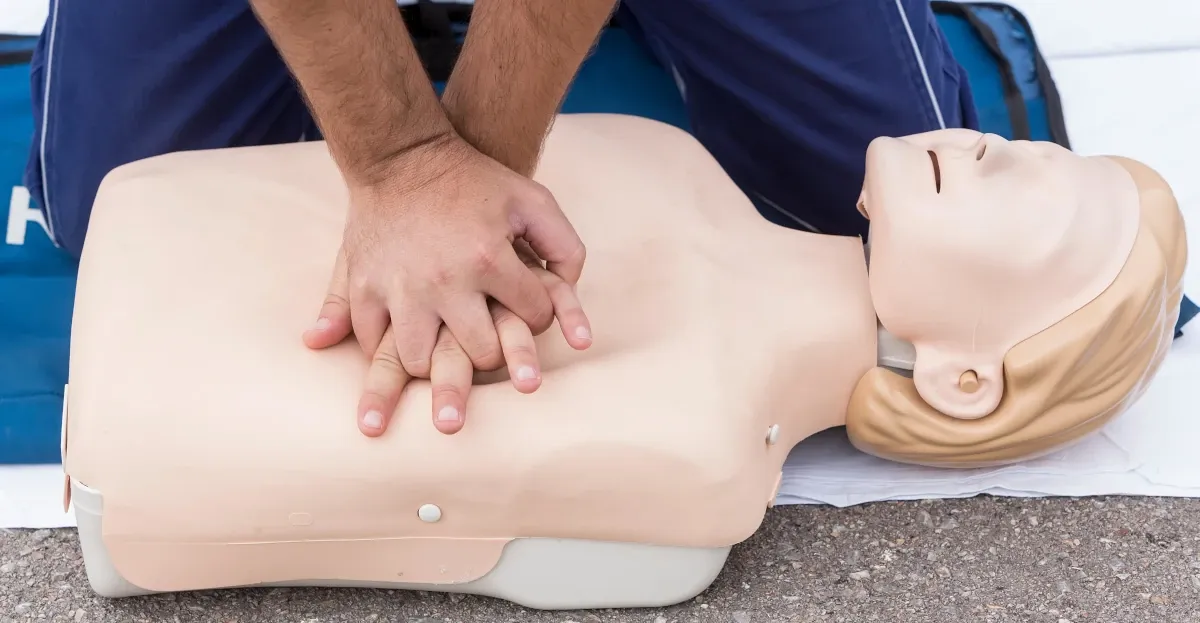
Annie, are you OK?’ isn’t just a lyric. It links back to CPR training and the Resusci Anne manikin, and it’s a neat reminder of what matters in a real cardiac arrest: call 999, start compressions fast, and don’t wait
The surprising true story of how Michael Jackson wrote the perfect CPR song
Most people who have done a first aid course have heard that "Stayin' Alive" by the Bee Gees is the song to think of when doing chest compressions. A decent chunk of those people have quietly wondered whether there isn't something better.
There is. And it has been hiding in plain sight since 1987.
Smooth Criminal by Michael Jackson sits at 116-118 beats per minute. The target compression rate for CPR is 100-120 beats per minute. There is also a drum beat in the background at ~1 second intervals. The maths works. But the tempo is only half the story. The other half is that Michael Jackson did not stumble onto that rhythm by accident.
The story behind the song
In his 2012 documentary Bad25, director Spike Lee asked Jackson about the origins of Smooth Criminal. According to Lee's account, Jackson had recently completed CPR training and had been practising on a Resusci Annie manikin. The phrase that stuck with him was the responsiveness check: "Annie, are you OK?"
That phrase became the hook of the song. The intensity of the refrain, repeated eleven times in the final chorus, mirrors the urgency of a rescuer working on an unresponsive patient. Jackson turned a first aid assessment into one of the most recognisable pop moments of the 1980s.
The American Heart Association confirmed the connection in 2012, noting that Jackson had been CPR trained and that "Annie are you OK?" was drawn directly from the standard responsiveness check taught on CPR courses worldwide.
There is another layer to this worth noticing. Listen to Smooth Criminal carefully and you will hear a steady drum beat in the background at roughly one-second intervals. It is easy to read that as a heartbeat, and the song does open with exactly that effect. If you use two chest compressions per drum beat, you land comfortably inside the modern target range of 100-120 per minute.
That detail matters more when you consider when Jackson trained. CPR guidelines at the time recommended around 60 compressions per minute, not the 100-120 we teach today. At 60 per minute, one compression per drum beat fits precisely. Jackson was not writing to the modern standard because it did not yet exist. He was writing to what he had been taught, and the song carries that rhythm in its bones. Fewer and fewer people who trained under the old guidelines are still practising, but the song they inspired has outlasted the standard it was built around.
Who is Annie, anyway?
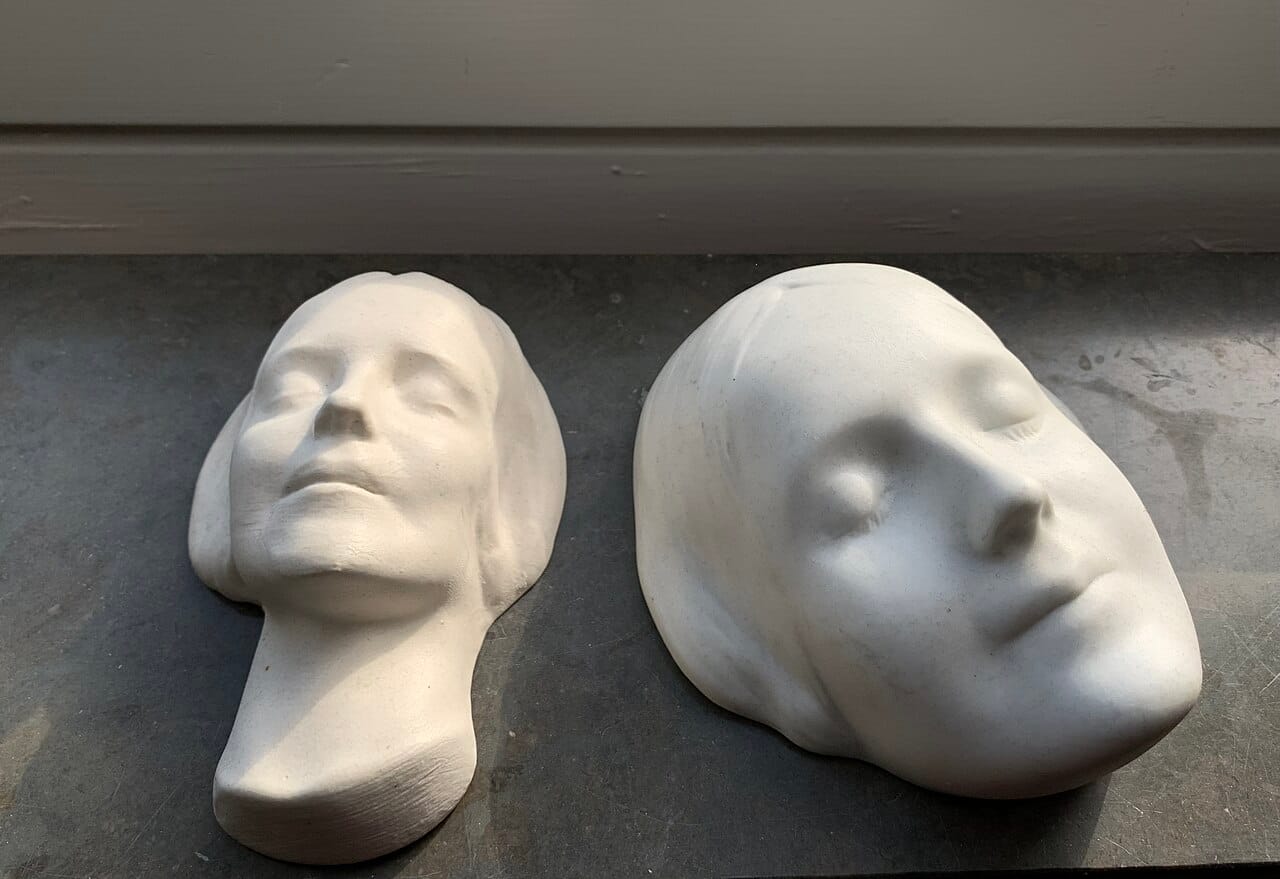
Resusci Anne was created in 1960 by Norwegian toy manufacturer Asmund Laerdal, working with physicians Peter Safar and Bjorn Lind. She was designed to teach mouth-to-mouth resuscitation, and her passive, lifelike face was modelled on a death mask.
The face itself has an extraordinary history. In the late 19th century, the body of an unidentified young woman was pulled from the River Seine in Paris. Her peaceful expression led the attending pathologist to commission a plaster cast of her face. The mask became a popular ornament across Europe, reproduced in thousands of copies. It was this face, known as L'Inconnue de la Seine, that Laerdal chose for his manikin.
Often described as one of the most reproduced faces in history, originally cast from a drowned woman, became the training dummy that inspired one of the biggest-selling albums of all time. First aid has stranger stories in it than most people realise.
Why the beat matters
The Resuscitation Council UK guidelines (2025) specify a compression rate of 100-120 per minute. That range is not arbitrary. Too slow and you are not moving enough blood. Too fast and the heart has insufficient time to refill between compressions, reducing output. Aiming for the middle of that range, rather than the edges, gives you a reasonable margin for the natural variation that comes with physical exertion and stress.
The problem in a real emergency is that almost nobody has a metronome to hand, and counting aloud while maintaining depth, position, and composure is harder than it sounds. A familiar song with the right beat gives your brain an anchor. Studies have shown that people perform compressions more consistently when they have a rhythmic reference point.
The song does not need to be playing out loud. You just need to know it well enough that your brain can run it internally. That is why the songs used in training matter. Whatever gets lodged in your memory in that classroom is what you will reach for when it counts.
The CPR playlist: songs that actually work
Smooth Criminal is the headline act, but it is not performing alone. Here are songs across different genres and generations that sit inside the 100-120 BPM window.
| Song | Artist | BPM | Notes |
|---|---|---|---|
| Smooth Criminal | Michael Jackson | 117 | The one. CPR written into its DNA. |
| Stayin' Alive | Bee Gees | 103 | The classic. Everyone knows it. A little tired. |
| Dancing Queen | ABBA | 100 | Lower end but works. Impossible to forget. |
| I Will Survive | Gloria Gaynor | 117 | Appropriate sentiment. Strong beat. |
| Can't Stop the Feeling | Justin Timberlake | 113 | Works well for millennial learners. |
| Wellerman | Sea Shanty / various | 120 | Upper limit. Solid rhythm, memorable. |
| Man in the Mirror | Michael Jackson | 100 | Works. Thematically appropriate too. |
| MMMBop | Hanson | 104 | You will feel embarrassed. It still works. |
| Never Gonna Give You Up | Rick Astley | 113 | Unavoidable. 113 BPM. Use it. |
Songs that should not be anywhere near a resuscitation attempt
The BPM is right. The title is not. These belong on a different list.
| Song | Artist | BPM | Problem |
|---|---|---|---|
| Another One Bites the Dust | Queen | 110 | Perfect tempo. Terrible message. |
| Highway to Hell | AC/DC | 116 | Directionally wrong. |
| Die Young | Black Sabbath | 105 | No. |
| Don't Fear the Reaper | Blue Oyster Cult | 140 | Too fast. Also thematically problematic. |
A note on actually using songs
The point of the song is to carry the rhythm in your memory, not to perform it. Nobody expects you to break into song during a cardiac emergency. What the research suggests is that people who have a strong rhythmic reference point during training produce more consistent compressions when they need to perform CPR for real.
The best CPR song is therefore the one that gets most deeply embedded during your training. If your instructor uses Stayin' Alive and you have heard it in every class you have ever attended, that is your anchor. For anyone doing a course with Constellation Training, there is a reasonable chance Smooth Criminal now makes the shortlist.
One more thing
Annie, the manikin who inspired a hit record, is still in first aid training rooms across the UK. The face on the model in your next course may trace its lineage back to that Paris pathologist and his 19th century death mask.
First aid has a unexpected and richer history than it gets credit for. If you want to understand it properly, and be genuinely prepared to use it, formal training is where that knowledge takes root.
Constellation Training offers FAIB-approved first aid qualifications, including courses in emergency first aid, paediatric first aid, and NUCO Ofqual-regulated First Aid for Mental Health at Levels 1, 2 and 3. Details are available at our website.
Sources
Spike Lee (dir.), Bad25, ABC documentary special, 2012
American Heart Association CPR Blog, "Annie's a Smooth Criminal", November 2012. cprblog.heart.org
Resuscitation Council UK, Adult Basic Life Support Guidelines, 2021 (updated 2025)
BPM data: GetSongBPM.com, SongBPM.com
Laerdal Medical, The History of Resusci Anne, laerdal.com